nt to see how online sales training can help teams simplify offers without sounding pushy?
Introduction of follow up mistakes that cause ghosting
You sent the email. You waited. And nothing came back. Follow up mistakes that cause ghosting are usually small, but they quietly kill deals and client trust.
Most people think ghosting means the prospect is not interested. That is rarely true. In many cases, the follow up created friction, pressure, or confusion without you noticing.
Bad follow ups push people into silence. They feel unsure, overloaded, or uncomfortable replying. That is how follow up mistakes that cause ghosting show up in real life.
This article shows where follow ups go wrong and what to change. You will learn how to keep conversations moving and get clear answers without chasing. When follow ups get ignored or conversations go cold, the right sales training helps you reduce friction, keep momentum, and make it easy for clients to respond.

Follow up mistakes that cause ghosting explained clearly
Ghosting happens when a follow up makes replying feel harder than ignoring it. That can be emotional, mental, or practical effort. When effort rises, silence follows.
Follow up mistakes that cause ghosting often appear after early interest. The call went well. The proposal made sense. Then the follow up shifted the tone and momentum dropped.
Why follow up mistakes cause ghosting in the first place
People ghost when they feel pressure or uncertainty. They may like you, but not feel ready to decide. Silence feels safer than saying no.
Another reason is mental overload. Long messages, unclear next steps, or too many choices trigger delay. These follow up mistakes that cause ghosting sit inside normal human behaviour.
Follow up mistakes that cause ghosting during timing
Following up too fast can feel like being watched. It raises tension and makes people pull back. Waiting too long does the opposite and drains urgency.
Random gaps also hurt trust. If there was no agreed next step, the prospect does not feel responsible to reply. Timing errors are a common cause of follow up mistakes that cause ghosting.
Follow up mistakes that cause ghosting in your message
Messages that say just checking in add no reason to respond. The reader has to think too hard about what to say back. That effort leads to silence.
Another issue is repeating the same message again. Sending the same thread with no new context feels lazy. These follow up mistakes that cause ghosting often go unnoticed by the sender.

Follow up mistakes that cause ghosting around value
Talking about your service instead of their problem breaks relevance. The reader does not see why replying helps them. Interest fades quietly.
Generic advice or content also misses the mark. If it does not match their exact concern, it feels dismissive. This is one of the most common follow up mistakes that cause ghosting.
Follow up mistakes that cause ghosting in your process
Too many options slow decisions. Long lists of times, files, or choices push people into delay. Simple feels safe. Complex does not.
Using only one channel is another issue. Some people ignore email but reply on LinkedIn or phone. Poor process design fuels follow up mistakes that cause ghosting.
Follow up mistakes that cause ghosting in relationships
People avoid replies when they fear an awkward conversation. Cost, risk, or partner approval often sit unspoken. If you do not name them, silence fills the gap.
Another mistake is not giving permission to say no. When people feel trapped, they disappear. This emotional block is central to follow up mistakes that cause ghosting.
Fixing follow up mistakes that cause ghosting with a simple framework
Every follow up needs a clear reason to exist. It should link directly to something they already said or did. That lowers resistance.
It also needs one easy reply. Yes or no works better than open questions. This approach removes follow up mistakes that cause ghosting without sounding pushy.
A follow up sequence that prevents ghosting
Good follow ups start before the silence. Agree the next step while you are still speaking. That creates shared expectation.
Each message should move the conversation forward in small steps. New insight, simple check, or clear close. This structure avoids follow up mistakes that cause ghosting later.
Follow up examples that reduce ghosting
After an enquiry, restate the reason they reached out. Keep the message short and focused on their need. Make the reply easy.
After a proposal, summarise the decision in one line. Ask a clear question that narrows choice. These examples reduce follow up mistakes that cause ghosting in real situations.
Follow up mistakes that cause ghosting for financial advisers
Clients often delay because money decisions feel heavy. Unclear process increases anxiety and silence. Clear language builds calm.
Advisers also face compliance limits, which can blur messages. Plain English still works. Reducing follow up mistakes that cause ghosting protects trust.
Tracking follow up mistakes that cause ghosting over time
Reply rates show where friction starts. If replies drop after proposals, the issue is clarity, not interest. Data removes guesswork.
Subject lines, message length, and timing all matter. Small tweaks change outcomes. Tracking helps spot follow up mistakes that cause ghosting early.
Knowing when to stop follow ups without burning bridges
Some conversations are delayed, not dead. Others are finished but unspoken. Knowing the difference saves time.
A clean close gives people relief. It keeps trust intact and leaves the door open. This step prevents follow up mistakes that cause ghosting from repeating.
FAQ on follow up mistakes that cause ghosting
Why do good conversations still end in ghosting?
Because interest is not the same as readiness. Follow up mistakes that cause ghosting often add pressure or effort at the wrong moment.
How many follow ups are too many?
There is no fixed number. Stop when messages add no new value or clarity. Silence at that point is your answer.
What is the biggest follow up mistake that causes ghosting?
Making the reply hard. Long messages, vague asks, and unclear next steps push people into avoidance instead of response.
Ready to elevate your B2B sales? 🚀
Whether you’re a B2B salesperson looking to enhance your sales skills or a leader aiming to sharpen your sales strategy in business-to-business selling, let’s work together to take your sales pitch to the next level.
Take my Master Your Pitch session for just £399 and discover how to deliver engaging, natural conversations that drive results without pushy tactics while building rapport.
Not sure what training is best? Either book a call or give my £99 Power Hour a go
If you’re looking for in-person sales trainer delivering sales training delivered in Nottingham, Derby, Leicester, Lincoln, Mansfield, Chesterfield or across the East Midlands, down to London and beyond or up to Scotland, please contact me directly to arrange a session tailored for your team

Other Useful FAQs
Why do clients want to shop around, and why isn’t that a bad thing?
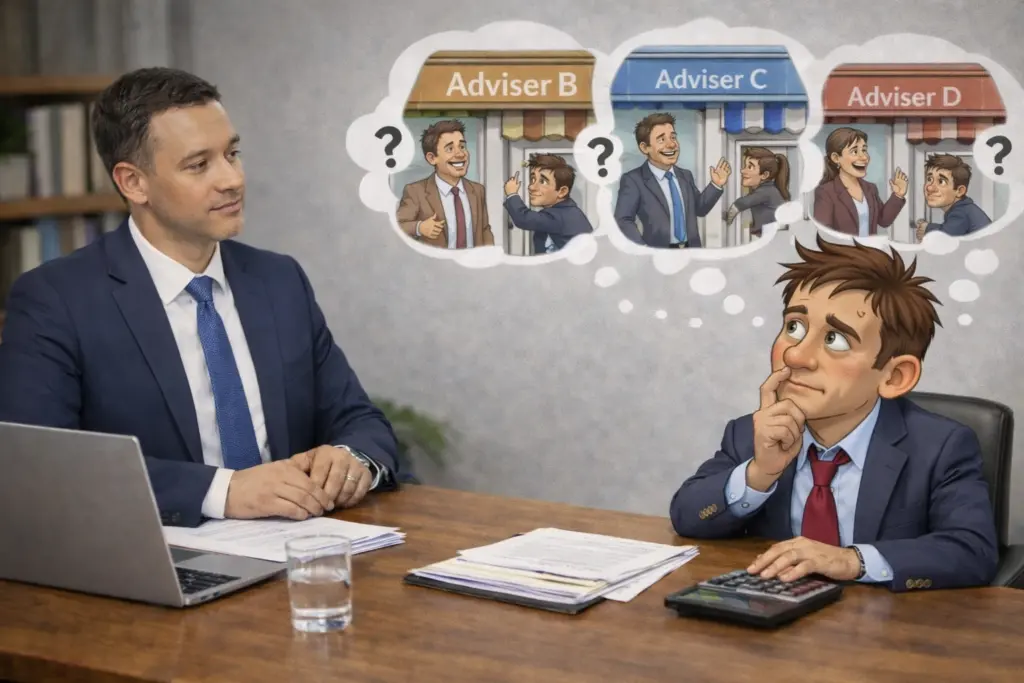
Shopping around doesn’t mean lack of interest. It means clients are trying to feel safe. This article explains why clients compare advisers and how to respond without chasing or discounting. Read Brutal Reality: Clients Want To Shop Around, So Lead It
How do you explain risk without overwhelming clients?
Risk explanations often trigger fear instead of clarity. This article shows how advisers explain risk calmly so clients stay engaged and understand what actually matters. Read how to explain risk without overwhelming clients.
Why do clients suddenly go quiet during meetings?
Silence is usually a warning sign. Something stopped making sense. This article explains what causes clients to shut down mid meeting and how advisers spot it early. Read why clients suddenly go quiet during meetings
What changes when advisers move upmarket?
Moving upmarket isn’t just higher fees. It changes client expectations, conversations, and how value is judged. This article explains the hidden risks advisers hit when they move upmarket without changing how they sell. Read what changes when advisers move upmarket.
Why do advisers stay busy but don’t grow?
A full diary doesn’t mean progress. Many advisers work flat out but see little revenue movement. This article explains why activity stays high while growth stalls. Read why advisers stay busy but don’t grow.
Why do sales conversations that feel like advice turn clients off?
Advice heavy conversations sound helpful but often create pressure and resistance. This article explains why clients feel uncomfortable and how advisers unknowingly cause it. Read sales conversations that feel like advice
Why do good prospects ghost financial advisers?
Ghosting usually isn’t rejection. It’s uncertainty. Prospects liked the meeting but didn’t feel clear enough to move forward. This article explains why good prospects disappear and what causes it. Read why good prospects ghost financial advisers.
Why do senior advisers struggle with modern buyers?
What worked before doesn’t land the same way now. Buyers process decisions differently and spot old patterns fast. This article explains why experienced advisers struggle and how buying behaviour has changed. Read why senior advisers struggle with modern buyers.
Why don’t clients trust financial advice straight away?
Trust isn’t automatic. Clients are cautious, overloaded, and unsure who to believe. This article explains why trust doesn’t happen instantly and what advisers often do that slows it down. Read why clients don’t trust financial advice straight away.
How do advisers attract better fit clients?
Better fit clients don’t come from better marketing. They come from clearer conversations. This article explains how advisers attract the right clients and filter out the wrong ones without trying. Read how advisers attract better fit clients.
How do financial advisers talk like humans, not experts?
Expert language creates distance. Human language creates decisions. This article shows how advisers explain advice in a way clients actually connect with. Read how financial advisers talk like humans not experts
How do advisers stop giving free advice without losing trust?
Free advice feels helpful but it weakens positioning and delays decisions. This article explains a clear system advisers use to set boundaries and still build trust. Read how advisers stop giving free advice