
Want to improve your cybersecurity sales process? Discover a practical, no-pressure approach to winning more business.
Introduction of Ransomware Attacks
Ransomware attacks do not just lock files anymore. They now steal data, stop operations, and pressure firms into fast, costly choices. Many teams still prepare for yesterday’s threat, not the attack methods now being used.
That gap is the problem. A business may have backups, antivirus, and a written policy, yet still lose access to key systems when a modern ransomware incident hits. The real issue is that many leaders do not see how fast these cyber threats have changed.
This article fixes that. It explains how ransomware attacks are evolving, where weak points sit, what strong ransomware protection looks like, and which ransomware prevention steps cut risk before damage spreads. It also shows what to do when an attack is already in motion.
By the end, you will have a clear view of ransomware trends, practical ransomware recovery strategies, and the shape of real enterprise ransomware defence. That means fewer blind spots, better decisions, and a stronger response when pressure is highest.
For context, this is what Forbes advisers say about the persistence of ransomware attacks and the need for stronger defencethis is what Forbes advisers say about the persistence of ransomware attacks and the need for stronger defence, which also reinforces the growing importance of clearer client conversations around cyber risk supported by sales training for accounting.
If ransomware risks are clear but clients still don’t act, this sales training for cybersecurity companies helps turn urgency into decisions.

What ransomware attacks are and why they are getting harder to stop
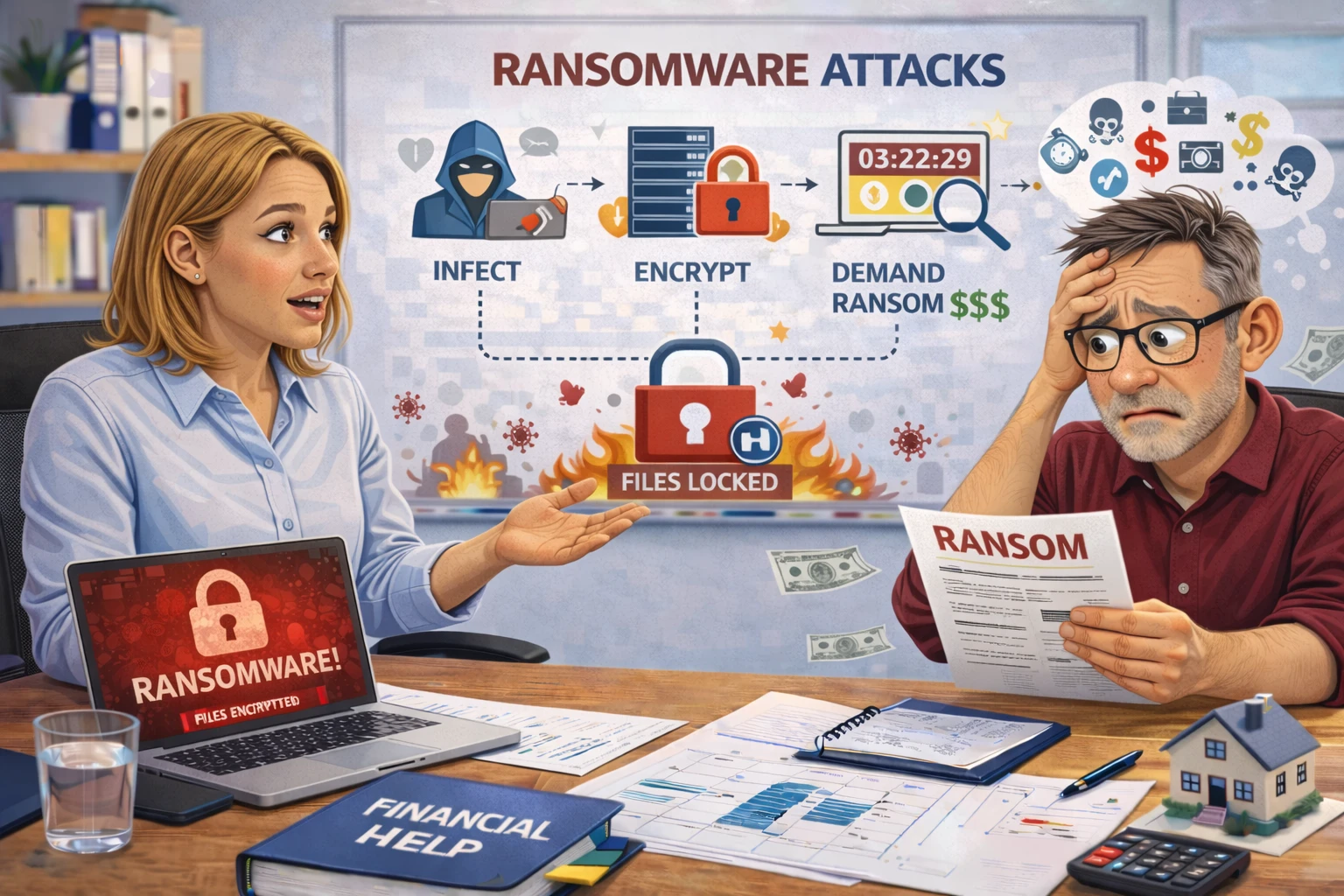
Ransomware attacks began as a simpler crime. A victim clicked a bad link, malware encrypted files, and a payment demand appeared. That basic pattern still exists, but the damage now goes far beyond locked documents.
Today, many attackers break in quietly, stay inside for days, and map the network before they act. They look for backups, admin rights, cloud tools, and high value data. By the time encryption starts, the real attack may have been building for some time.
This matters because modern extortion is built on pressure. Criminal groups do not just block access to systems. They threaten to leak sensitive data, contact customers, or hit the same firm again if the victim refuses to pay.
That makes ransomware protection harder than it used to be. A business is not only trying to stop malware. It is trying to stop data theft, service outage, financial loss, legal fallout, and loss of trust at the same time.
How ransomware attacks are evolving
The biggest shift is that ransomware attacks now work like full intrusions. Attackers often start with stolen credentials, weak remote access, or a software flaw. They then move across the network, raise privileges, and collect data before any ransom note appears.
This changes the fight. If a team only watches for encryption, it is already late in the attack chain. Good defence now means spotting suspicious access, odd account behaviour, and signs of lateral movement before systems are hit.
Double extortion is now common. The attacker steals data first, then encrypts systems, then demands money for both decryption and silence. Some groups go further and pressure customers, partners, or staff, which turns the incident into triple extortion.
Another shift is the targeting of recovery. Attackers know firms rely on backups, so they try to delete them, corrupt them, or encrypt the tools used to restore systems. That is why ransomware recovery strategies now need clean copies, isolated storage, and repeated testing.
The most common ways ransomware attacks start
Many ransomware attacks still begin with phishing. One message can look like an invoice, a contract update, or a login alert. A rushed click can hand over credentials or start a malicious download.
Social engineering works because it targets people, not just software. Attackers use urgency, fear, curiosity, and authority to push fast action. That is why training staff to pause and check is still a core part of ransomware prevention.
Unpatched systems remain a major entry point. If a known flaw is left open, attackers can use it to gain access without any employee making a mistake. This is one reason patching delays create real business risk, not just technical debt.
Remote access tools also create exposure. Weak VPN settings, exposed RDP, poor password habits, and missing multi factor authentication can all open the door. Third party suppliers can widen that risk if their access is not tightly controlled and reviewed.

The ransomware attack chain step by step
A typical ransomware attack starts with initial access. That may come through phishing, a stolen password, a device with weak protection, or an exposed service on the internet. Once inside, the attacker looks for the fastest route to wider control.
Next comes privilege escalation. The goal is to move from one account or device to a stronger position with more rights. If the attacker reaches admin access, the rest of the environment can become much easier to control.
Lateral movement follows. The attacker jumps from system to system, learns where key data sits, and looks for domain controllers, file servers, cloud links, and backup systems. This stage is often quiet, which is why good monitoring matters so much.
Then comes data theft, encryption, and extortion. At that point, clean up is harder, recovery takes longer, and pressure grows quickly. Early detection is not a bonus feature in enterprise ransomware defence. It is often the difference between disruption and disaster.
Warning signs your business may already be under attack
Some warning signs appear before ransomware attacks become visible to the whole business. Login attempts at odd times, access from unusual places, or sudden privilege changes can all point to a live problem. These signals are easy to miss if logs are weak or alerts are too noisy.
Attackers also try to blind the victim. They may disable security tools, stop services, or tamper with logs. If an endpoint tool goes offline for no clear reason, that should never be brushed aside.
File changes can offer another clue. A wave of renamed files, large numbers of failed file opens, or strange script activity may show that malware is staging or testing the environment. Backups that start failing without a clear cause can also be a serious sign.
Admin tools can be abused as well. PowerShell, remote management utilities, and built in system tools may look normal on the surface, yet still form part of a ransomware campaign. The key is not only what tool is used, but who used it, when, where, and why.
Ransomware protection that reduces risk before an attack lands
Strong ransomware protection starts with identity controls. Multi factor authentication blocks many account takeovers, especially where password theft is the first move. It is not perfect on its own, but it cuts a large amount of preventable risk.
Access control matters just as much. Staff should only have the access they need, and privileged accounts should be tightly limited, monitored, and separated from day to day work. If one account falls, the blast radius stays smaller.
Patch management also plays a direct role in ransomware prevention. Attackers scan for known flaws because they know many firms are slow to fix them. A shorter patch cycle closes easy doors and forces criminals to work harder for entry.
Email filtering, endpoint detection, network segmentation, and awareness training add more layers. No single control stops every threat. But together they reduce the number of openings, slow attacker movement, and raise the chance of finding trouble early.
Ransomware prevention best practices for modern organisations
The best ransomware prevention plans are layered. They do not depend on one vendor, one alert, or one lucky catch. They combine people, process, and technology in a way that keeps working when one part fails.
That means focusing on behaviour as well as malware signatures. Many modern attacks use normal admin tools or trusted processes, which can look harmless if a team only watches for known malicious files. Behaviour based detection gives security teams a better chance to spot the real pattern.
Identity systems deserve special attention. If attackers gain control of Active Directory or another central identity service, they can spread fast and lock out defenders. Protecting admin paths, service accounts, and privileged sessions is a core part of enterprise ransomware defence.
Cloud and hybrid environments need the same level of care. Data may sit across SaaS tools, on site servers, and remote devices at once. Good defence covers all of it, with realistic testing that mirrors how attackers actually move through a business.

Enterprise ransomware defence: what good looks like
Real enterprise ransomware defence starts at leadership level. Boards and senior teams need to treat ransomware as an operational and financial risk, not only an IT issue. If decision making is unclear before an incident, confusion will grow fast during one.
A good plan sets out roles, escalation paths, legal input, communications, and technical actions. It also covers backup isolation, recovery order, supplier coordination, and the point at which outside incident response support is called in. These details need practice, not just paperwork.
People readiness matters here too. Internal teams may need cybersecurity sales training when they explain risk to buyers of managed services, while cyber security sales training helps commercial teams describe ransomware protection without fear based language. Firms that sell security tools often strengthen consistency through cybersecurity sales enablement and focused cybersecurity sales coaching.
In vendor led environments, selling cybersecurity solutions well depends on clarity, not jargon. A sound cybersecurity sales strategy should connect risk, control gaps, and business impact in plain language. That is where cybersecurity sales skills, B2B cybersecurity sales training, and technical sales training cybersecurity can improve how decision makers understand the value of stronger defence.
What to do during ransomware attacks
When ransomware attacks are active, speed matters, but panic makes things worse. The first step is to isolate affected systems, preserve evidence, and stop unnecessary movement across the network. Teams should avoid random shutdowns unless there is a clear reason, because that can damage evidence or interrupt recovery work.
The next step is to work from an incident plan. Security, IT, legal, communications, and leadership all need a shared picture of what is known, what is not known, and what happens next. A rushed guess can create more harm than a short pause for facts.
Outside specialists can be vital when the scale is unclear. For some firms, that support may come from incident responders, forensic teams, insurers, or legal advisers. The key is to bring them in early enough to shape the response, not after major choices have already been made.
The ransom question is always difficult. Payment does not guarantee full recovery, clean data return, or future safety. The better path is to strengthen ransomware recovery strategies before a crisis, so the business is not forced into a bad decision when pressure is at its highest.
Ransomware recovery strategies that speed up recovery
Recovery starts with a proper damage check. Teams need to know which systems were touched, what data was stolen, which accounts were abused, and whether the attacker still has access. Restoring too early can rebuild the same problem.
This is why clean room recovery matters. Critical systems should be restored into a controlled setting where they can be checked before they return to production. Recovery is not only about getting systems back. It is about getting them back safely.
Backups remain central, but only if they are clean, separate, and tested. Many firms discover too late that backups were incomplete, too old, or reachable by the attacker. Good ransomware protection includes backup immutability, clear restore order, and regular recovery drills.
Recovery should also follow business priority, not technical habit. Payment systems, client records, communications, and core operations may need to come first. A tested plan reduces delay, lowers stress, and gives leaders a firmer grip during a difficult event.

How to build long term resilience after ransomware attacks
After ransomware attacks, many firms focus only on repair. That is not enough. A good post incident review looks at entry point, missed signals, access gaps, detection failures, response delays, and recovery weaknesses.
The goal is not blame. The goal is to turn a painful event into better defence, faster decisions, and clearer ownership. If the same route stays open after the incident, the business has learned very little.
This is also where internal capability can improve. Teams that support security vendors may invest in a cybersecurity sales certification, better security software sales training, and a clearer cybersecurity sales methodology so customer conversations around ransomware prevention stay accurate and useful. Others may build capability through cybersecurity sales workshops, cybersecurity sales consulting, or a practical cybersecurity sales course for teams discussing risk with buyers.
Long term strength also comes from clearer messaging between technical and commercial teams. Better cybersecurity solution selling helps buyers grasp what controls matter most. That may include enterprise cybersecurity sales training, cybersecurity channel sales training, cybersecurity pre sales training, and cybersecurity sales enablement training so advice on ransomware trends and cyber risk is clear from first conversation to final handover.
FAQ on ransomware attacks cyber security
What are the first cyber security signs of ransomware attacks?
The first cyber security signs of ransomware attacks often appear before files are locked. These can include odd logins, disabled security tools, failed backups, unusual script use, and sudden access changes. Fast review of those signals can stop a wider breach. For firms that explain risk to clients, sales training for cybersecurity can also help teams speak more clearly about business impact and response choices.
What is the most effective cyber security approach to ransomware protection?
The most effective cyber security approach to ransomware protection is layered defence. That means strong identity controls, patching, endpoint detection, network segmentation, awareness training, and isolated backups that are tested often. No single control is enough on its own. For organisations that advise clients on cyber risk, sales training for cybersecurity can support clearer conversations around value, readiness, and safer decisions.
How often should cyber security teams test ransomware recovery strategies?
Cyber security teams should test ransomware recovery strategies on a regular schedule and after major system changes. Tabletop exercises, backup restore tests, and clean room recovery drills all matter because a written plan is not proof that recovery will work. Testing shows what breaks before a real incident does. In advisory settings, sales training for cybersecurity can help teams explain why recovery testing is a business issue, not just a technical task.
What should a cyber security enterprise ransomware defence plan include?
A cyber security enterprise ransomware defence plan should include prevention controls, monitoring, incident response roles, legal and communications steps, supplier coordination, backup isolation, recovery order, and post incident review. It should also set clear decision points for escalation and outside support. A plan only works if people know their role and have practised it. Where firms need to discuss these steps with clients, sales training for cybersecurity can improve clarity and trust in those conversations.
Cybersecurity clients still delaying after ransomware warnings?
If your prospects understand the risks but still delay, the issue is not the threat. It’s how the value is being explained.
This sales training for cybersecurity companies helps you simplify complex conversations so clients understand what’s at stake and take action sooner.
If you’re in SaaS or a broader tech space, this sales training for SaaS companies helps teams explain value clearly without sounding technical or pushy.
And if you’re looking for in-person support, these sales training courses in London are designed for teams who want clearer conversations and faster decisions
Here are a few guides on Cybersecurity:
How cybersecurity companies improve sales conversations
Victorious: Cybersecurity Channel Sales Training for MSP Partners,
Cyber Compliance: We Don’t Know If We’re Compliant, Show Us
Urgent Cyber Security Protection Risks for SMEs
Critical cyber vulnerabilities you must patch now