Want to see how online sales training can help teams simplify offers without sounding pushy?
Introduction of Condescending Financial Advisor
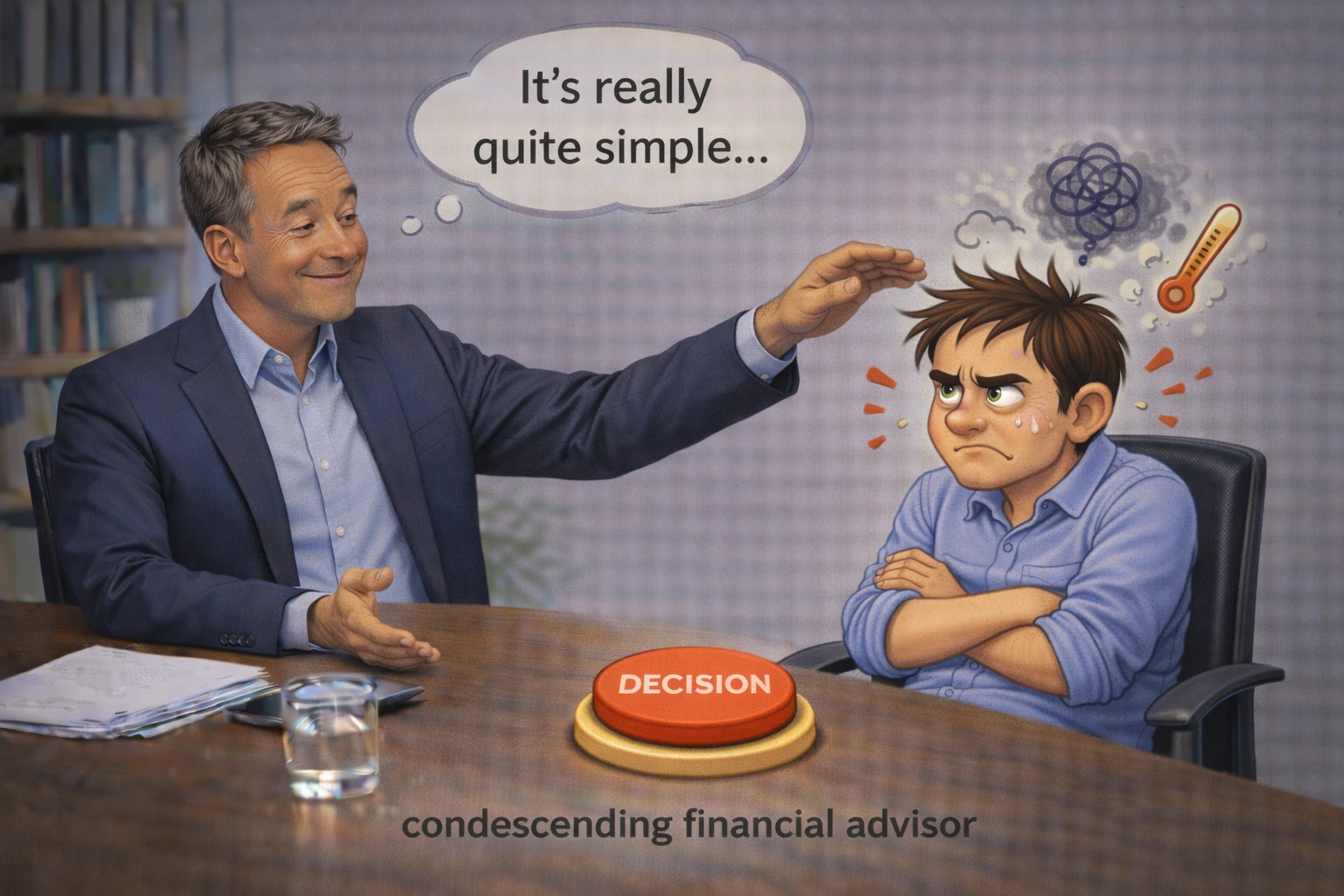
You walk into a review meeting expecting clarity. You walk out feeling like you failed a test you did not know you were sitting. That is the emotional sting many people feel with a condescending financial advisor.
You start replaying the chat in your head. Was it your question, your tone, or the way they rushed past your worries. When financial advice feels patronising, people stop asking questions, and that is where costly mistakes begin.
The problem is not always the numbers. It is the way the advice is delivered, the language, and the power dynamic in the room. If you have had a bad financial advisor experience, you can end up delaying decisions because you do not feel safe to choose.
This article shows you the patterns that cause the talked down to feeling. It also shows what respectful financial advice sounds like, and how to fix the relationship if you want to stay. And if you want to leave, you will know what to look for next time. If your advice ever risks sounding patronising or over technical, practical sales training helps you communicate with respect, clarity, and real client confidence.

What “talked down to” feels like with a condescending financial advisor
Being dismissed rarely sounds loud. It often sounds like a quick sigh, a half smile, then a move to the next topic. With a condescending financial advisor, your question can get treated like a speed bump, not a real concern.
Clients often notice it in what is not said. No one checks what you already know, or whether the explanation landed. That is how financial advisor communication problems start, even when the plan itself is fine.
Some people feel managed, not advised. The meeting becomes a lecture, and you become an audience member. That dynamic is common when a condescending financial advisor believes certainty matters more than collaboration.
When that happens, you stop feeling like the decision is yours. You start feeling like you are being steered. And once choice feels removed, trust in financial advice drops fast.
Shame is the hidden cost. You can feel embarrassed for not knowing, even though you are paying to be guided. A condescending financial advisor can trigger that shame without meaning to.
And shame changes behaviour. People nod, agree, and then do nothing. That silence is not comfort, it is self protection.
Fast test: is it really a condescending financial advisor problem?
Confidence sounds like calm clarity. Arrogance sounds like certainty without curiosity. A condescending financial advisor tends to speak in conclusions, not questions.
You can hear it in the pacing. They answer before you finish, or they jump to the solution before they have the full story. That is not expertise, that is impatience dressed as authority.
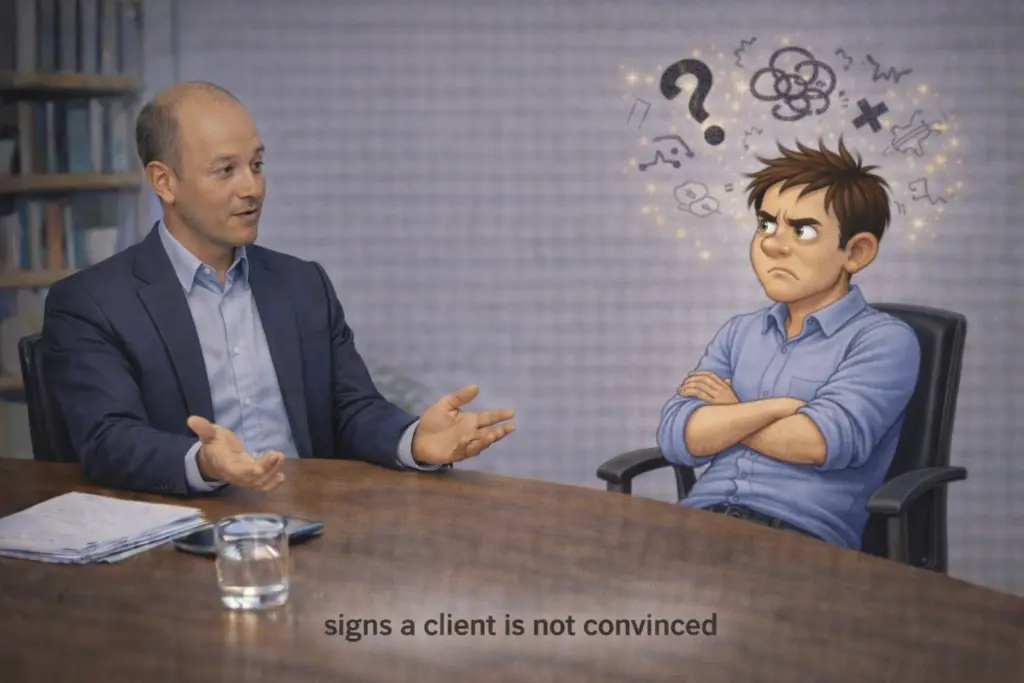
Poor communication can look similar, but the feeling is different. Bad communication leaves you confused but still respected. A condescending financial advisor leaves you confused and smaller than when you arrived.
Watch for how they react when you ask for plain language. A respectful adviser adjusts without making you feel slow. A patronising adviser makes the request feel like a burden.
Urgency is another mask. Sometimes an adviser is simply under pressure and tries to drive decisions. But a condescending financial advisor often uses urgency to shut down discussion.
True urgency still leaves room for consent. You can say, “I need a moment,” and they accept it. If they push harder, you are not being advised, you are being handled.

The common triggers behind financial advisor communication problems
Jargon is the fastest way to create distance. It turns a human discussion into a technical performance. A condescending financial advisor might not mean it, but acronym dumping can feel like a status move.
The result is predictable. You stop asking questions because every question feels like it will expose you. That is how decision paralysis starts, even for smart clients.
Talking at people happens when the adviser follows their script, not your needs. They speak for ten minutes, then ask, “Any questions?” like it is a formality. A condescending financial advisor often does not notice the client has mentally checked out.
You can test it by interrupting with a simple “Why?”. If they become irritated, the meeting is about them, not you. Respectful financial advice welcomes the “why” because it leads to better choices.
Interrupting is a control signal. It tells you your words matter less than their next point. A condescending financial advisor may do it to stay on time, but it still lands as disrespect.
It also breaks thinking. Clients need space to form their own view. When you are cut off, you lose your thread and then you lose confidence.
Finishing your sentences feels small but it is huge. It suggests they already know what you will say, and your detail is not worth hearing. A condescending financial advisor can turn a client into a stereotype in seconds.
Clients then stop sharing nuance. They stop revealing fears, family context, or past mistakes. That missing detail can ruin the advice.
“You don’t need to worry” is meant to soothe. But it often lands as dismissal, especially if you have a real reason to worry. A condescending financial advisor can unintentionally tell you your emotions are wrong.
A better response is to name the concern first. “That makes sense” is not weakness, it is respect. Trust is built when the client feels seen before being led.
One size fits all plans sound clean, but they can feel careless. If every recommendation is the same, clients assume the adviser is not listening. A condescending financial advisor sometimes relies on templates and calls it efficiency.
Clients notice personal details being missed. They notice assumptions, like spending habits or risk tolerance, being guessed. That is not personal advice, it is generic packaging.
Defensiveness is a red flag. When you challenge a fee, a fund choice, or a projection, the room can tighten. A condescending financial advisor may treat challenge as disrespect rather than normal due diligence.
Healthy advice conversations expect scrutiny. If they cannot explain a choice without attitude, the choice is not strong. Honest financial advisor behaviour shows its work.
Power moves can be subtle. Tone, pace, posture, even where the adviser sits can create a hierarchy. A condescending financial advisor often speaks faster, stands while you sit, and controls the documents.
None of that proves bad intent. But it does shape how safe you feel. And safety is what keeps clients engaged, asking, and deciding.
Why clients react so strongly to a condescending financial advisor
Money shame often arrives before the adviser does. People already worry they have left it too late, saved too little, or made mistakes. A condescending financial advisor can press on that bruise without knowing it.
Once shame is active, people hide. They minimise details, soften the truth, or pretend they understand. That makes the advice worse, not better.
Status threat is real. When the room says “expert versus beginner,” the client can feel judged. A condescending financial advisor can trigger that with tiny cues, like correcting language or joking at the client’s expense.
The brain then shifts into defence mode. You focus on looking competent rather than making a good decision. That is why simple questions suddenly feel hard to ask.
Loss of control is the next hit. Financial decisions already carry risk, and risk feels personal. If a condescending financial advisor takes the wheel, clients feel trapped.
Trapped people do not decide. They delay, avoid, and look for escape routes. That is buying behaviour driven by emotion, not logic.
Decision paralysis often looks like “I need to think.” But inside, it is fear of choosing wrong while feeling unsupported. A condescending financial advisor can create paralysis by making the client feel alone in the choice.
Clear financial messaging reduces paralysis. When options are plain, trade offs are clear, and the client sets the pace, decisions happen. Respect beats pressure every time.
What a bad financial advisor experience does next
Many clients nod along to keep the peace. They do not want conflict, and they do not want to look uninformed. With a condescending financial advisor, nodding becomes a coping strategy.
Then nothing happens. Forms sit unsigned, and follow up tasks drift. The client is not lazy, they are disengaged.
Ghosting is common after a bruising meeting. Replies get slower, calls get missed, and the adviser starts chasing. This is often blamed on the client, but it starts with trust.
Clients ghost when they do not feel respected. They also ghost when they feel sold to. Ethical selling reduces ghosting because it keeps control with the client. Unresolved communication problems are one of the valid reasons clients feel unhappy with their financial advisor.
Quietly price shopping is another sign. A client may keep the adviser but start comparing elsewhere. A condescending financial advisor can push people into shopping mode because they are looking for safety, not a better spreadsheet.
And this is where relationships break without a dramatic moment. It is not one big blow up. It is a slow drop in belief.
“I’ll think about it” can mean many things. But after a bad financial advisor experience, it often means “I don’t trust this conversation.” A condescending financial advisor can hear it as an objection, when it is really a trust signal.
When trust is low, even good advice feels risky. Clients need respect before they can accept guidance. That is the real reason deals stall in financial services.
What respectful financial advice sounds like in real conversations
Some phrases create calm. They show the client you are on their side, not above them. A condescending financial advisor rarely uses these because they feel slower.
Respectful language checks understanding without blame. It sounds like “Want the simple version first, then the detail?” That is clear financial messaging that keeps dignity intact.
Patronising phrases often sound polite. “This is basic,” “Don’t worry your head,” or “It’s complicated” can land like a slap. A condescending financial advisor may think they are being reassuring.
Clients hear a different message. They hear “You are not capable.” And once that lands, the client stops being open.
Explaining complex advice without simplifying the person is a skill. You can simplify the idea while treating the client as smart. A condescending financial advisor often simplifies by removing the client from the thinking.
A better approach keeps the client in the driver’s seat. You explain the core idea, give a real example, then ask what matters most to them. That is respectful financial advice in practice.
Repairing trust after a condescending financial advisor moment
A reset can be fast if it is sincere. Start the next meeting by naming the issue without drama. A condescending financial advisor can say, “Last time I moved too quickly and I may have talked over you.”
That single line can reopen a closed door. It tells the client you noticed their experience. And it signals honest financial advisor behaviour.
An apology needs to be clean. No excuses, no “if you felt,” and no blame on time pressure. A condescending financial advisor should apologise for impact, not intention.
Clients do not need a speech. They need a change in behaviour. The apology matters because it proves the relationship is safe enough to be real.
Re contracting the relationship sets new rules. Agree what decisions look like, what pace is acceptable, and how questions will be handled. A condescending financial advisor must share control again.
This also helps the adviser. Clear expectations reduce tension, reduce rework, and improve client understanding. Everyone wins when the conversation becomes collaborative.
A simple structure for respectful financial advice that clients trust
Start by asking what the client already knows. It prevents over explaining and stops accidental talking down. A condescending financial advisor often assumes knowledge level instead of checking it.
Ask what they want today. Some meetings need reassurance, some need action, and some need education. Matching the meeting to the need is how trust based selling looks in a financial advice setting.
Explain one idea at a time. If you stack three concepts, clients will remember none. A condescending financial advisor often overwhelms, then blames the client for not following.
Use a real world example that matches their life. Not a generic story, but something they recognise. That is how you explain complex advice without making the person feel small.
Check understanding in a way that protects dignity. “How does that sound so far?” works better than “Do you understand?” A condescending financial advisor often uses the second and does not see the damage.
Also invite pace control. “Want me to go slower or go deeper?” gives choice. Choice is the opposite of being talked down to.
Offer clear options and clear trade offs. Clients hate being cornered into one “right” answer. A condescending financial advisor can sound like there is only one sensible choice.
Then make it explicit that the client decides. That line reduces fear and reduces decision paralysis. Consultative selling works because it respects autonomy.
Honest financial advisor behaviour clients notice quickly
Fees and conflicts need early clarity. If that comes late, clients assume something is being hidden. A condescending financial advisor may avoid it because they fear pushback.
But transparency builds confidence. When you explain cost in plain language, clients relax. Respectful financial advice treats money talk as normal, not awkward.
Clients also notice the difference between facts and guesses. When an adviser states assumptions as truth, it feels like manipulation. A condescending financial advisor sometimes does this without realising.
Say what you know, what you think, and what you need to confirm. That builds credibility. It also reduces the chance of a bad financial advisor experience later.
“I don’t know” can be powerful. It shows honesty and limits ego. A condescending financial advisor avoids it because they think certainty is the product.
Clients prefer truth to theatre. If you do not know, you can say what you will check and why it matters. That is how trust in financial advice grows.
When it is time to leave a condescending financial advisor
Some red flags do not improve. Repeated disrespect, repeated dismissal, and repeated defensiveness are patterns, not bad days. A condescending financial advisor who will not change is not a safe long term partner.
Another red flag is pressure that ignores your pace. If you cannot slow down without being judged, you are not being served. Ethical selling never needs to shrink the client to close a decision.
Before hiring someone new, ask direct questions. Ask how they explain risk, how they handle questions, and what a good meeting looks like. A condescending financial advisor will usually reveal themselves in how they react to these questions.
Listen for curiosity. A respectful adviser asks about your thinking, not just your assets. That is the start of better adviser client conversations.
Switching does not need drama. Ask for a clear summary of your position, request your documents, and keep it factual. A condescending financial advisor may try to make you feel disloyal.
You are allowed to choose a better fit. Your finances are too important for a relationship that makes you feel small. Respectful financial advice should feel like support, not supervision.
FAQ on Condescending Financial Advisor
What does respectful financial advice sound like in practice?
It uses plain language and checks understanding without blame. It gives options with trade offs and lets the client set the pace. It names fees and conflicts early, and it admits uncertainty when needed. It feels like a conversation where your choices matter.
How can I tell my adviser I feel talked down to without causing conflict?
Keep it specific and calm. Say what happened, how it landed, and what you need instead, like slower explanations or less jargon. A good adviser will adjust quickly and thank you for saying it. If they get defensive, that tells you a lot about the relationship.
Why do clients feel talked down to by a condescending financial advisor?
It often comes from tone, speed, and jargon, not just the words. When questions are dismissed or explanations are rushed, clients feel judged. That triggers money shame and reduces trust. The client then stops asking, and the advice stops working
Ready to elevate your B2B sales? 🚀
Whether you’re a B2B salesperson looking to enhance your sales skills or a leader aiming to sharpen your sales strategy in business-to-business selling, let’s work together to take your sales pitch to the next level.
Take my Master Your Pitch session for just £399 and discover how to deliver engaging, natural conversations that drive results without pushy tactics while building rapport.
Not sure what training is best? Either book a call or give my £99 Power Hour a go
If you’re looking for in-person sales trainer delivering sales training delivered in Nottingham, Derby, Leicester, Lincoln, Mansfield, Chesterfield or across the East Midlands, down to London, to the midland with Birmingham and beyond or up to Manchester and even further to Scotland, please contact me directly to arrange a session tailored for your team

Other Useful FAQs
Why do adviser websites lose prospects?
Traffic isn’t the problem. Clarity is. Most adviser websites look fine but fail to answer the real questions prospects have. This article explains why prospects leave and what advisers miss. Read why adviser websites lose prospects.
Why do clients say yes and then disappear?
A yes isn’t a decision. It’s often relief in the moment. This article explains why clients agree, vanish, and what that behaviour really signals. Read why clients say yes then disappear.
How do you follow up without sounding desperate?
Most follow ups feel awkward because they’re framed wrong. This article shows how advisers follow up calmly, clearly, and without pressure. Read how to follow up without sounding desperate
Why do clients disengage after the suitability report?
The report makes sense to advisers, but it often overwhelms clients. Too much detail too late creates doubt, not confidence. This article explains why disengagement happens after the report and what advisers miss. Read why clients disengage after the suitability report.
What follow up mistakes cause clients to ghost?
Most ghosting happens after the meeting, not during it. Poor timing, vague messages, and pressure signals push clients away. This article breaks down the follow up mistakes that cause silence fast. Read follow up mistakes that cause ghosting.
How should advisers handle the “I need to talk to my partner” objection?
This objection isn’t resistance. It’s uncertainty. This article explains what clients really mean when they say it and how advisers respond without pushing or losing momentum. Read the “I need to talk to my partner” objection
How do advisers close clients while staying compliant?
Compliance isn’t the blocker. Unclear structure is. This article explains how advisers guide decisions, stay within the rules, and avoid deals stalling at the end. Read how advisers close clients while staying compliant.
How do advisers influence decisions ethically?
Clients don’t need persuading. They need clarity. This article shows how advisers influence decisions in a calm, ethical way without pressure or tactics. Read how advisers influence decisions ethically.
How do advisers close clients without being pushy?
Being non pushy doesn’t mean being passive. This article explains how advisers help clients decide without chasing, nudging, or forcing the close. Read how advisers close clients without being pushy.
How do advisers sell by having better conversations?
Selling doesn’t fail because of price or competition. It fails because conversations drift, overload, or lose direction. This article explains how advisers win work by changing how they talk, not what they sell. Read how advisers sell by having better conversations.
How does fear affect financial advice decisions?
Most clients don’t struggle with logic. They struggle with fear of getting it wrong. This article explains how fear shapes decisions and what advisers unknowingly do to increase it. Read how fear affects financial advice decisions.
How do advisers explain fees without creating fear or resistance?
Fee conversations often trigger tension because they’re framed badly. This article shows how advisers explain fees calmly so clients stay open instead of defensive. Read how to explain fees without creating fear or resistance.