Want to see how online sales training can help teams simplify offers without sounding pushy?
Introduction – Discovery Meeting Structure.
A messy discovery meeting structure wastes the first 10 minutes. The client feels unsure. You feel rushed. And the meeting turns into a fact find instead of a real conversation.
Most financial advisers have a good process. But the discovery meeting structure often lives in your head. So the client cannot follow it. They leave with more questions than clarity.
The first meeting is where trust is won or lost. A strong discovery meeting structure stops you sounding salesy. It keeps the focus on their life, not your solution.
This article gives you a clear discovery meeting structure you can repeat every time. It will help you reduce overwhelm. It will help the client move from vague hopes to a clean next step. This is what Forbes says advisers know about retention: acquiring a new client can cost five to seven times more than keeping an existing one, which is why stronger relationships built through consistent conversations and better sales training drive long term client loyalty.

What a discovery meeting is (and what it is not)
A discovery meeting structure is not a mini advice session. It is not a product chat. It is not a deep dive into every policy and number. It is a guided conversation to understand the person.
Clients often arrive expecting you to tell them what to do. That pressure makes advisers jump ahead. A better first meeting agenda gives you permission to slow down. And it makes the client feel safe enough to be honest.
A discovery meeting structure is also not the same as a fact find. A fact find is data. Discovery is meaning. One can happen without the other, but the best advisers make them work together.
When you treat the first meeting as discovery, you change the tone. You ask for the story before the spreadsheet. You look for what matters, not what is easiest to record. And that changes the quality of the next meeting.
The outcome of a good discovery meeting structure is simple. You leave with clarity on goals, worries, and what success looks like. The client leaves feeling understood. And you both know the next step.
Without that shared outcome, you can do a “nice chat” and still lose the case. People do not book meeting two when they feel fuzzy. Clarity is what creates momentum. Even before any recommendation.
The psychology behind a great Discovery meeting structure
Clients do not resist advice. They resist feeling trapped. A discovery meeting structure that feels like a sales funnel triggers their guard. So they stay polite, vague, and non committal.
A better adviser discovery approach gives control back to the client. You ask permission to ask questions. You explain why you ask. And you show them they can pause or correct you at any time.
Decision paralysis is common in financial decision making. Too many choices feel like risk. A good discovery meeting structure lowers the mental load by focusing on what matters first.
In the first 10 minutes, your job is calm and clarity. One clear agenda. One clear outcome. A simple promise that today is about understanding, not fixing everything. That alone reduces stress.
Trust is built through small signals. You listen without filling silence. You reflect back their words, not your version. And you keep your language plain, even when the topic is complex.
Credentials can help, but behaviour does more. A strong first meeting structure proves you are safe. It shows you can hold sensitive details with care. And it shows you will not rush them into a decision.
Pre meeting setup that makes the meeting easier
The invite sets the tone for your discovery meeting structure. If your message is vague, the client arrives unsure. If it is too long, they arrive tired. Keep it clear, short, and human.
Tell them what the meeting is for. Tell them what it is not for. Tell them what happens at the end. That frame makes the first meeting feel simpler.
Send a one page agenda in plain English. It should read like a client friendly plan, not an adviser checklist. It should show there is a process. And it should remove fear of the unknown.
A good agenda also gives you a reason to steer. If the client jumps around, you can bring them back kindly. And if you need to park a topic, you can do it without offence. That is part of a strong discovery meeting structure.
Pre meeting questions can save time. But too many questions create friction. Ask only what improves the conversation, not what satisfies curiosity. Think “fewer, better”.
Use questions that reveal context, not every detail. What prompted them to book. What they want help with. Who else is involved in decisions. That supports a clean discovery meeting structure.
Your compliance boundaries should be clear before the meeting. Clients often ask for advice in meeting one. If you do not set limits, you either refuse awkwardly or you overstep.
Explain the difference between guidance and a recommendation. Explain what you can and cannot say yet. This protects you and builds trust. It also keeps your first meeting agenda clean.
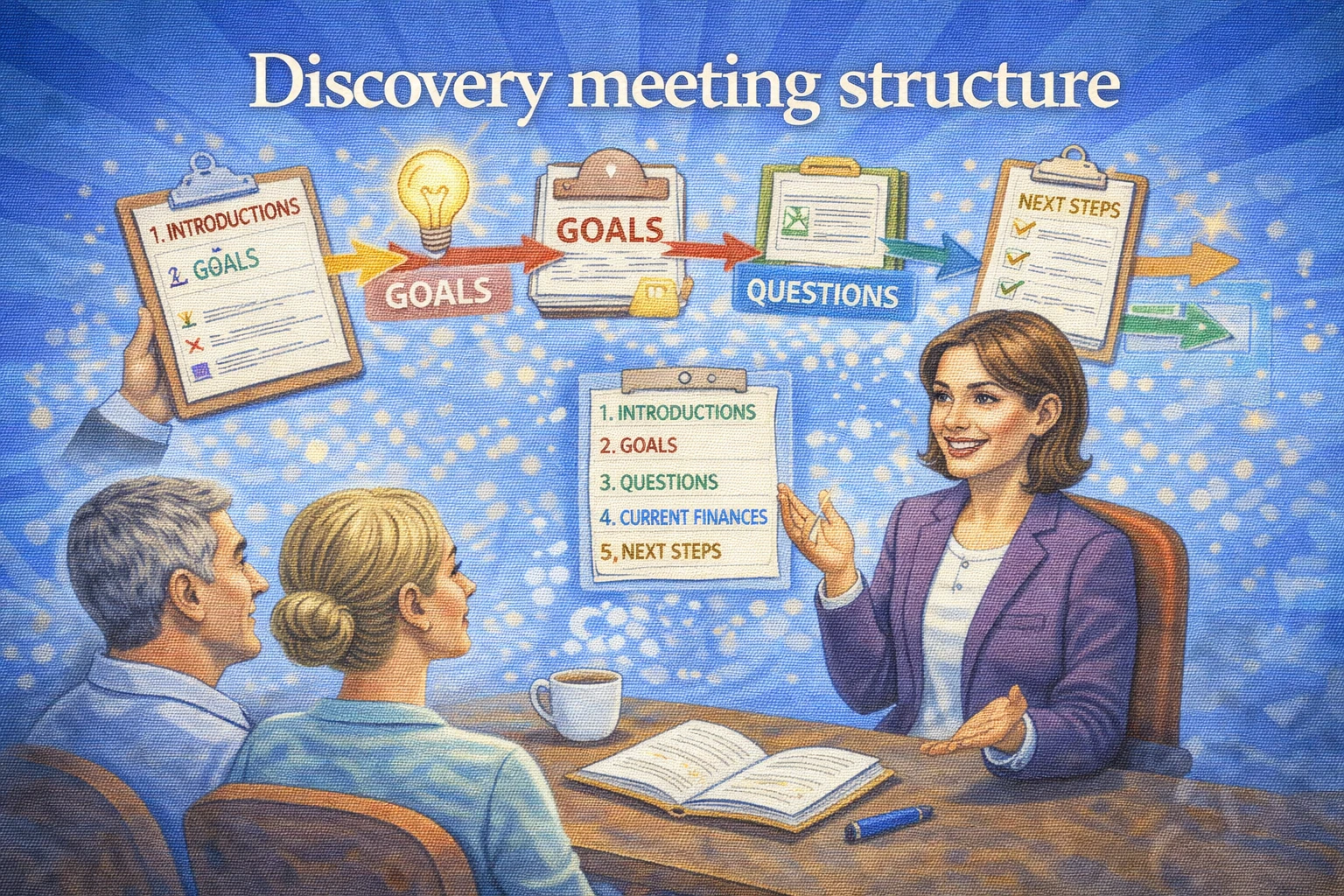
The 60 minute Discovery meeting structure (with timings)
The opening should feel calm and purposeful. In your discovery meeting structure, the first minutes are about welcome, rapport, and permission. You explain how the meeting will run. And you make it easy to speak honestly.
Say what you will cover. Say how long you have. Say you will leave time for questions. Then ask if they want anything added. That one move increases trust fast.
Goals come next because goals create direction. A strong discovery meeting structure asks what they want life to look like. Not just “retire at 60”, but why that matters. And what they hope will change.
When you get a goal, ask what it would give them. More freedom. More security. More time with family. That is buying behaviour in real life. It turns a target into motivation.
Then you move to the current situation at a high level. This is not the deep fact find. It is the shape of their world. Income, major assets, key debts, and big commitments.
Keep it broad so you do not drown the meeting in detail. The discovery meeting structure works when the client feels progress. A high level view gives you enough to spot gaps. And it keeps the conversation moving.
Now you explore risks, worries, and blockers. People rarely book because things are perfect. They book because something feels uncertain. Your adviser client conversation should make that safe to say.
Ask what keeps them awake. Ask what they fear getting wrong. Ask what they have been putting off. That is where decision paralysis often lives.
The recap is where many advisers lose points. A good discovery meeting structure includes a “tell back” in the client’s words. You summarise their goals, their concerns, and what matters most. Then you ask what you missed.
This is not a sales summary. It is a trust moment. When clients feel seen, they relax. And they become more open in meeting two.
The close should be a clear next step. You agree what happens next and when. You also agree what you both will do before then. That turns a chat into a plan.
Make the next step specific. A second meeting, a data gather, a scope call, or a joint meeting with a partner. Whatever it is, the discovery meeting structure should end with certainty.
The core question sets (use only what you need)
Vision questions help the client picture a future worth working for. In your discovery meeting structure, ask what “better” looks like. Ask what they want more of. And ask what they want less of.
These questions reduce vague answers. They also help you talk later in plain outcomes. That improves client understanding and keeps your advice relevant.
Pain questions uncover friction. What feels messy. What feels heavy. What they keep avoiding. These are often the real reasons people seek a financial adviser.
Handled well, these questions build trust in financial advice. You are not poking for drama. You are finding the issue they actually want solved. And that shapes the next step.
Decision style questions stop surprises later. Ask how they decide. Ask what they need to feel comfortable. Ask who else needs to be involved. This is basic consultative selling.
It also protects the client. You can match pace to their style. You can reduce pressure. And you can avoid the “I need to talk to my partner” stall.
Money beliefs matter, but go gently. Ask what money was like growing up. Ask what “safe” means to them. Ask what they worry you might judge them for. Keep it light and respectful.
This helps you explain complex advice in a way they can accept. It also shows care. And it often reveals why they delay decisions even when logic says “act”.
Fit questions stop bad matches. Ask what they expect from an adviser. Ask what a great relationship looks like. Ask what they do not want. This supports ethical selling.
It also supports your positioning. You do not need everyone. A clear discovery meeting structure helps you choose clients you can genuinely help.

How to talk about fees and value without killing momentum
Fees land better when the client feels understood. In a discovery meeting structure, you do not lead with cost. You earn the right to talk about money by showing you listened. Then fees feel normal.
If the client asks early, answer calmly. Give a range if needed. Then return to understanding their situation. The meeting should not turn into a price debate.
Value should be described in outcomes, not jargon. Use simple phrases. More clarity. Better decisions. Fewer costly mistakes. Peace of mind. Those are real benefits.
Keep it specific to what they said. Tie value to their goals and worries. That is clear financial messaging. And it is what clients remember.
When people say “I’ll think about it”, it is often uncertainty. Ask what they want to think through. Ask what is missing. Ask what would make the next step easy.
Do not chase. Do not push. Use your discovery meeting structure to keep the tone safe. Clarity beats pressure every time.
Recap and next steps that actually get done
Your recap should have three parts. What they want. What they worry about. What matters most to them. This is the simplest way to make a discovery meeting structure feel complete.
Use their phrases. If they said “I just want to stop worrying”, say that. That builds trust fast. And it reduces the risk of misunderstanding.
Your follow up message should arrive within 24 hours. Keep it short. Repeat the recap. Confirm the next step. And list what you need from them.
This is where many advisers lose momentum. A vague email creates delay. A clean message supports adviser client conversations and keeps the client engaged.
In your CRM, capture facts and feelings. Facts are the numbers and dates. Feelings are the drivers, fears, and priorities. Both matter for financial decision making.
Also note decision style and who is involved. Note any sensitive points and how they responded. This makes meeting two smoother. And it keeps your discovery meeting structure consistent.
Variations of the Discovery meeting structure
A 30 minute version is not a compressed 60 minute meeting. It is triage. You still frame the meeting. You still find the key goal and key worry. And you still agree one next step.
Keep the question set tight. Avoid deep detail. Focus on fit and direction. That keeps the discovery meeting structure useful, not rushed.
Couples need extra care. There is often a shared goal and separate worries. Give both people space. Check in with each person directly. And watch for one voice taking over.
Agree how decisions will be made. Agree what happens if they disagree. This supports trust based selling because it feels fair. And it reduces later delays.
Remote discovery meetings can work well, but attention is fragile. Set camera expectations. Keep documents off screen unless needed. Use more recap moments to keep clarity.
Also plan for tech friction. If sound is poor, pause and fix it. A calm response builds credibility. And it protects your discovery meeting structure.
High net worth or complex cases need scope boundaries. The first meeting can become a “tell me everything” session. You need to state what today can cover. Then outline what comes next.
If other professionals attend, set roles early. Who speaks for what. What is confidential. What will be shared. That keeps the first meeting agenda safe and focused.
Common mistakes that break trust fast
Talking too much is the most common error. In a discovery meeting structure, the client should speak more than you. If you fill every pause, you steal their thinking time. And you miss what matters.
Silence is useful. It helps clients go deeper. It also signals you are not trying to control the conversation. That is how trust grows.
Jumping to solutions is tempting. You hear a problem and want to help. But early solutions can make clients feel pushed. They may nod politely and then disengage.
Hold back. Stay with the story. A strong discovery meeting structure earns the solution later. And it leads to better advice anyway.
Over questioning can feel like an interview. If you fire question after question, the client shuts down. Mix questions with reflection. Share why you ask. And check comfort.
Also avoid piling on sensitive questions too soon. Build safety first. The right pacing improves client psychology. And it keeps the meeting human.
Vague next steps create drift. “I’ll send you something” is not enough. The client goes back to life. And your meeting becomes easy to forget.
End with a clear next action, a date, and ownership. That is what a good discovery meeting structure is for. It turns interest into motion.

Simple checklist, one page Discovery meeting structure
Before the meeting, prepare for clarity. Review what you know. Note your aim for the first meeting. Make your agenda one page. And keep your language plain.
Send the client what they need. A short agenda. A simple expectation of time. And a reminder that this meeting is about understanding, not judgement.
During the meeting, follow your discovery meeting structure with flexibility. Use the frame. Ask fewer, better questions. Reflect back key points. And keep an eye on pace.
If the client drifts, guide them back kindly. If emotion appears, allow it. If detail overwhelms, zoom out. Your job is clarity and trust.
After the meeting, lock in momentum. Send the recap. Confirm the next step. List what you need from them. And note both facts and feelings.
Then keep your promise. If you said you will send something by tomorrow, do it. Reliability builds financial adviser credibility. And it makes the client more likely to follow through too.
FAQ on discovery meeting structure for financial advisers
How long should a discovery meeting be for financial advisers?
For financial advisers, most discovery meetings work best at around 45 to 60 minutes. This allows time to understand goals, concerns, priorities, and agree a clear next step. If only 30 minutes is available, treat it as a focused triage rather than a full conversation. Sales training helps financial advisers structure discovery meetings so the time stays controlled, purposeful, and client focused.
Should financial advisers send an agenda before the discovery meeting?
Yes, a short agenda helps financial advisers reduce uncertainty and build trust before the conversation starts. It shows the meeting has a clear structure and helps clients arrive prepared to talk about what matters most. When clients know what to expect, they feel more relaxed and open. Sales training helps financial advisers use simple pre meeting communication to improve engagement and meeting quality.
When should financial advisers discuss fees in the first meeting?
Financial advisers should discuss fees once the client feels understood, or earlier if the client asks directly. In a strong discovery meeting structure, fee confidence comes from clarity about the problem, the approach, and the likely outcome. When fees are linked to value and next steps, the conversation feels fair rather than uncomfortable. Sales training helps financial advisers handle fee discussions calmly so pricing feels normal and expected.
Nationwide Sales Training For Ambitious B2B Teams
If you’re investing in nationwide sales training, your programme should reflect your industry, buyers and commercial goals. From my base in Mansfield, I help organisations across Nottingham, London and throughout the UK, delivering practical workshops on-site or through sales training online.
Specialist programmes include financial services sales training, mortgage adviser sales training, insurance sales training, sales training for software companies, technology sales training and telecommunications sales training. I also deliver sales training for corporate teams that helps businesses simplify complex sales conversations, communicate value more effectively and convert more opportunities.
See how Master Your Pitch can help prospects understand why they should choose you.
Ready to improve your sales conversations? Book a call and let’s find the right programme for your business.

Other Useful FAQs
How do you structure a first meeting so prospects become clients?
First meetings often feel positive but lead nowhere. This article explains how to structure the conversation so prospects feel clear, confident, and ready to move forward. Read how to structure a first meeting so prospects become clients.
Why don’t prospects see the value of financial advice?
The benefits of advice often feel invisible to clients. This article explains why prospects struggle to see value and how advisers make outcomes clear and tangible. Read why prospects don’t see the value of financial advice.
How do you explain your value so clients will pay your fees?
Fee resistance usually comes from unclear value, not price. This article shows how advisers explain their impact so clients understand what they’re really paying for. Read how to explain your value so clients pay your fees.
How can advisers increase fees or minimums without losing clients?
Raising fees feels risky when you expect pushback. This article explains how advisers increase prices confidently while keeping trust and retention high. Read increase fees or minimums without losing clients.
How do you get more referrals without asking awkwardly?
Most advisers avoid referral conversations because they feel uncomfortable. This article explains how to generate introductions naturally without sounding needy. Read get more referrals without asking awkwardly.
Should financial advisers specialise in a niche, and how do you choose one?
Niches reduce competition but choosing one feels risky. This article explains when specialising makes sense and how advisers decide where to focus. Read should advisers specialise in a niche.
What prospecting strategies help advisers win ideal clients?
Busy advisers often rely on inconsistent lead sources. This article explains practical prospecting approaches that attract better fit clients consistently. Read prospecting strategies that win ideal clients.
How do you build a referral engine instead of relying on chance?
Referrals often happen randomly, not predictably. This article explains how advisers create a simple system that generates introductions consistently. Read building a referral engine for advisers.
How does client understanding increase conversion?
Clients don’t act when they don’t fully understand the recommendation. This article explains how clearer client understanding leads to faster and more confident decisions. Read client understanding that converts.
What’s the easiest way for advisers to win new clients?
Winning new business doesn’t require more activity, it requires clearer positioning and conversations. This article explains the simplest way to attract and convert new clients consistently. Read how to win new clients the easy way.
How can financial advisers attract younger clients?
Younger prospects don’t respond to traditional messaging. This article explains what attracts them and how advisers adjust their approach to engage this audience. Read attracting younger clients fast.
How do you handle client objections and still build trust?
Objections aren’t resistance, they’re uncertainty. This article explains how advisers respond in a way that increases confidence instead of creating pressure. Read handling client objections and building trust