
Want to see how online sales training can help teams simplify offers without sounding pushy?
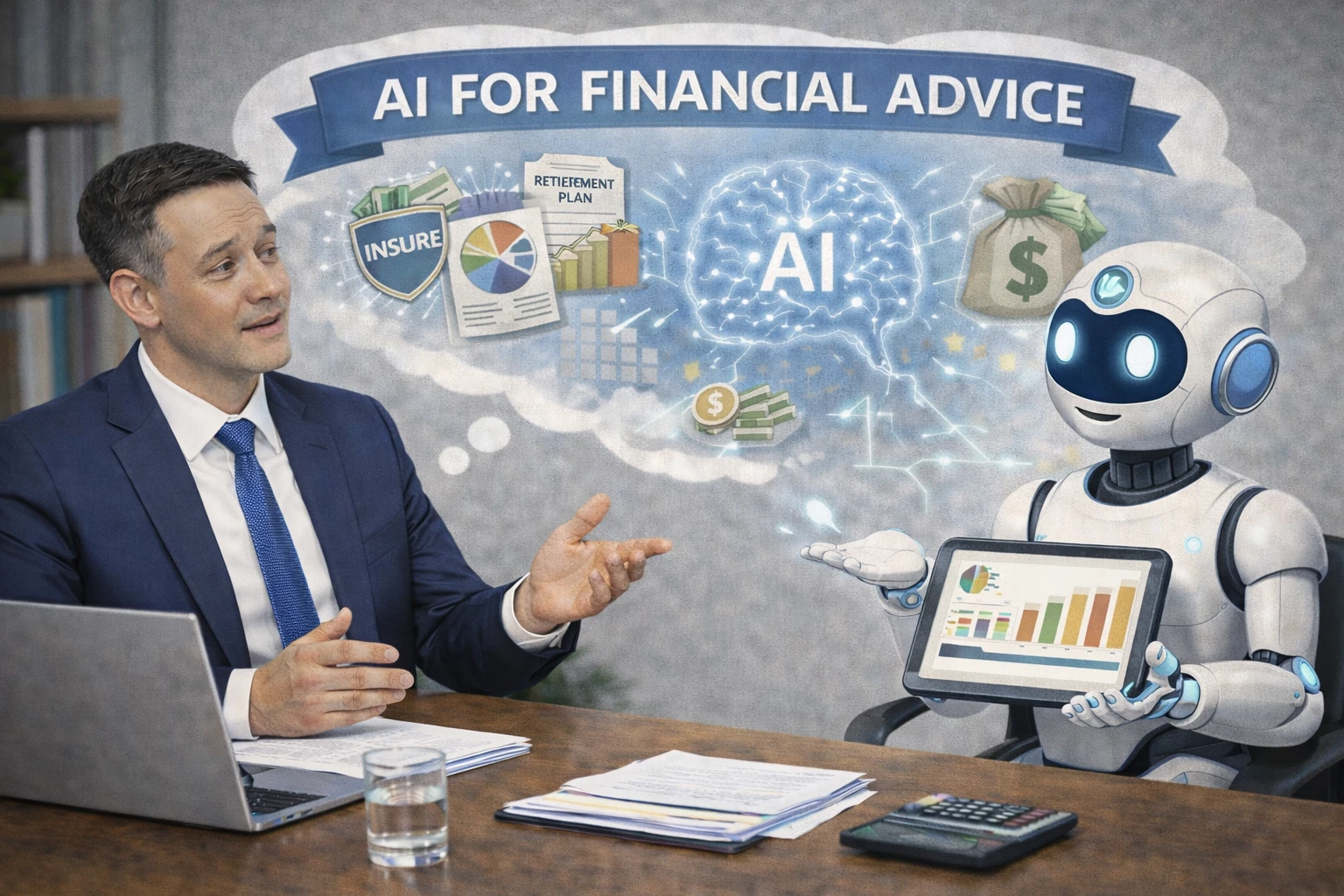
Introduction of AI for Financial Advice
AI for financial advice is everywhere now, but that does not mean people trust it. Many readers want faster answers about money, investments, pensions, and planning, yet they worry about getting the wrong result. That is a real problem when a confident sounding tool can still give poor guidance. This article will help you sort useful support from risky nonsense.
A lot of people turn to AI in finance because it feels quick, easy, and low effort. You can ask about tax, retirement, savings, or risk tolerance in seconds and get a polished reply back. But polished does not always mean correct, personal, or safe. That gap is where costly mistakes begin.
For some, the bigger issue is not a lack of information but too much of it. AI for financial advice can add to that confusion if the answers sound certain while missing the facts that matter most to your situation. That can lead to doubt, delay, and poor decisions. This guide will show where AI helps and where human judgement still matters more.
The goal here is simple. We will explain what artificial intelligence can do in financial planning, where it falls short, and how to use it without drifting into bad advice. If you want clearer thinking, better questions, and more confidence before speaking to a professional, you are in the right place.
This is what generative AI tools in personal finance advisers say about the risks and benefits of AI for financial advicewhile firms also invest in sales training to ensure technology supports clearer adviser client conversations rather than replacing human judgement.

What Is AI for Financial Advice?
AI for financial advice means using artificial intelligence tools to give financial information, patterns, suggestions, or support around money decisions. That can include chatbots, budgeting tools, investment apps, document summaries, and software that predicts customer needs. Some systems answer general questions. Others help advisers prepare for meetings, draft follow ups, or explain ideas in plain English.
That sounds simple, but there is an important line to understand. General financial information is not the same as personal regulated advice. A tool may explain what an ISA is, how pensions work, or what inflation does to savings, but that does not mean it knows what you should do. Once your goals, income, family needs, tax position, and risk profile come into the picture, things change fast.
This is where many people get tripped up. They ask a broad question and get a broad answer, then treat it like a personal recommendation. In reality, AI often works best as a starting point. It can help frame ideas, compare routes, and turn jargon into plain language, but it cannot always judge suitability in the way a financial adviser can.
It also helps to separate consumer tools from adviser tools. Some AI systems are built for public use. Others sit behind the scenes inside advice firms to save time, spot trends, and improve communication. Both matter, but they solve different problems. One speaks to the public. The other helps a financial adviser work more clearly and more efficiently.
Why More People Are Turning to AI for Financial Advice
The biggest draw is speed. People do not want to wait days to understand a pension option, a tax wrapper, or the basic difference between active and passive investing. AI can reply at once, and that feels useful when money worries are already stressful. Fast answers lower the barrier to action.
Cost is another reason. Many people assume speaking to a financial adviser will be expensive, formal, or only for the wealthy. AI feels easier to approach. It looks like a low pressure way to ask the basic questions people feel awkward asking elsewhere. That makes it appealing, especially for people early in their financial journey.
There is also a convenience factor that should not be ignored. AI tools are available late at night, early in the morning, and during busy working days. A person can ask about life insurance after putting the kids to bed or look up retirement income during a lunch break. That constant access gives AI for financial advice a practical edge.
Then there is clarity. Many people do not want more data. They want simpler words. Artificial intelligence often does a decent job of turning technical finance language into something easier to follow. That makes it attractive for people who feel put off by jargon, long reports, and hard to read product detail.
Where AI for Financial Advice Can Be Helpful
One of the best uses of AI is explanation. It can turn dense language into plain English and help people grasp the basics before a proper advice meeting. If someone does not understand compound growth, drawdown, asset allocation, or inheritance tax, a good AI prompt can make those ideas easier to follow. That alone can improve confidence.
It can also help people compare broad routes. A user may want to understand the difference between paying off a mortgage, adding to a pension, or building cash reserves. AI can lay out the logic, trade offs, and key questions in a clear format. It does not replace personal advice, but it can make the next step less foggy.
Another useful role is preparation. Many clients go into meetings unsure what to ask, what documents matter, or how to explain their concerns. AI can help them organise thoughts, list priorities, and frame useful questions for a financial adviser. That makes adviser client conversations sharper from the start.
There is value in summarising too. People often leave financial meetings with notes, reports, and terms they only partly understand. AI can summarise documents, turn long text into action points, and help someone remember what they need to check next. Used carefully, that can improve client understanding without adding more clutter.
Some tools also support budgeting and financial organisation. They can help spot spending patterns, group costs, show trends, and build a basic picture of where money goes. For households trying to regain control, that can be very useful. Clearer day to day visibility often leads to better financial decision making.
This matters because good choices rarely come from panic. They come from clearer thinking. If AI for financial advice helps someone feel more informed before they act, it has done something useful. The key is to keep that benefit in proportion and not let convenience turn into blind trust.

Where AI for Financial Advice Can Go Wrong
The biggest weakness is false confidence. AI can sound polished even when the answer is wrong, shallow, or based on missing facts. Many users mistake a fluent reply for a reliable one. In finance, that is a dangerous habit because bad assumptions can have expensive results.
Another issue is that generic answers often ignore the human side of money. A tool may explain what looks best on paper, but real people do not live on paper. They worry about family, health, timing, past mistakes, regret, and the fear of getting it wrong. A financial adviser sees those factors more clearly than a machine usually can.
There is also the problem of stale information. Rules, thresholds, rates, and product features change. If an AI tool uses old material or fills gaps with guesses, a user may act on facts that no longer fit the current picture. That matters a lot in areas such as tax, pensions, and investment planning.
Bias and hallucination are real risks too. AI systems do not always know when they do not know. They can invent sources, blur important distinctions, or produce a neat answer that hides uncertainty. That makes them poor judges of complex cases where small details change the right path.
Some users become more confused, not less. They ask five versions of the same question, get five slightly different replies, and end up stuck. Decision paralysis grows when too many answers seem possible. This is one reason why clear financial messaging still matters. People need direction, not just output.
And then there is tone. AI for financial advice often misses the emotional weight behind money decisions. A recent widow, a nervous first time investor, or a business owner worried about retirement is not just seeking data. They need judgement, context, and trust. Those are harder for software to give in a meaningful way.
Can AI Give Regulated Financial Advice?
This is where the line gets serious. AI can give information, education, and broad guidance, but personal regulated advice is a different matter. Regulated advice is based on the client’s own facts, needs, goals, and risk position. It also carries accountability. That is not the same as a chatbot offering a neat answer.
Suitability is the key issue. A proper recommendation should fit the person, not just the topic. It should consider affordability, objectives, time frame, attitude to risk, capacity for loss, tax position, and wider circumstances. A general AI tool usually does not gather or judge that depth well enough on its own.
There is also the matter of responsibility. If advice goes wrong, someone has to answer for it. A financial adviser works within rules, records decisions, explains reasoning, and stands behind the recommendation. Most public AI tools do not give that level of accountability. They may even warn users not to treat the content as advice.
That does not make AI useless. It makes its role narrower. It can support research, explanation, and preparation. It can improve the quality of questions and make financial topics less intimidating. But when personal consequences are high, the standard has to be higher too, and that is where regulated human advice still matters most.
The Biggest Risks of Using AI for Financial Advice
A major risk is poor input. If a person gives vague, incomplete, or misleading detail, the answer will often be weak from the start. Someone may ask what they should do with a pension without sharing age, income needs, debts, family priorities, or tax position. The output then feels clear while missing the real picture.
Privacy is another concern. People often paste sensitive information into online tools without thinking about where that data goes or how it may be used. Financial details are not casual details. Income, debt, investments, family arrangements, and business figures should be treated with care. Convenience should never outrun common sense.
Scams are part of the risk as well. Fraudsters are already using AI to write convincing messages, clone tone, and create content that sounds trustworthy. In financial services, that can be especially damaging. A person may receive a fake update, a false offer, or a polished message that pushes them towards a bad move.
Another risk is overconfidence. When an answer arrives quickly, users often feel they have done enough. They stop checking, stop asking, and stop thinking. That is how weak ideas gain force. AI for financial advice can create the illusion of certainty long before certainty exists.
Decision paralysis sits on the other side of that problem. Some people do not become overconfident. They become frozen. They keep asking for more comparisons, more scenarios, and more reassurance. The result is delay, drift, and no progress. That can be just as harmful as choosing badly.
The final issue is accountability. When a decision causes harm, who takes ownership of the reasoning? With a financial adviser, there is a clear professional relationship. With a general AI tool, there is often none. That gap matters. It affects trust, confidence, and the standard people should expect before making important money decisions.

AI for Financial Advice vs a Human Financial Adviser
AI wins on speed. It can answer simple questions at any time and present information in a tidy format. That makes it useful for first step learning, quick summaries, and broad comparisons. When someone wants a fast explanation of a term or concept, software can do a decent job.
A human financial adviser wins on judgement. Good advice is not only about facts. It is about meaning, fit, and consequence. An adviser can listen for hesitation, spot mixed motives, challenge poor assumptions, and help a client make sense of competing priorities. That is hard to copy with a machine.
There is also a difference between information and interpretation. AI may tell you what drawdown is. A financial adviser can tell you whether drawdown fits your retirement plans, risk level, and need for income stability. That move from data to personal meaning is where real value often sits.
Scale works in AI’s favour. It can process large amounts of text, summarise documents, and support many simple tasks at once. That is useful in modern advice firms. But personal understanding still belongs more to humans. People do not want to feel like a case file when the stakes are high.
Trust matters too. Clients often need reassurance that someone understands both the numbers and the person behind them. AI for financial advice can support that journey, but it does not replace the calm judgement of a financial adviser who knows the client’s fears, habits, and goals. That relationship still carries weight.
The smartest view is not machine versus human. It is machine with human. AI can save time, sharpen communication, and clear up simple confusion. The adviser then uses that time to think better, explain better, and guide better. That is a stronger mix than either side on its own.
The Smartest Way to Use AI for Financial Advice
Use AI for preparation, not for your final call. It is good for turning a messy topic into a clearer starting point. It can help you list questions, understand terms, and compare broad routes. That makes it a strong support tool before you speak to a financial adviser.
Always cross check key facts. If the issue involves tax, pensions, investment risk, estate planning, or legal detail, do not stop at one answer. Check current rules through trusted sources and ask a professional where the stakes are high. A quick answer is not the same as a sound decision.
Be careful with personal data. Do not paste in full financial records, policy numbers, account details, or highly sensitive family information. Even when a tool looks safe, treat private financial detail with caution. The less exposure, the better.
Use AI to improve your questions. That is one of its strongest uses. Ask it to help you frame what you want to understand, what trade offs matter, and what you should raise in a meeting. Better questions usually lead to better adviser client conversations, and that is where real progress starts.
Bring outputs into the human process. If an AI tool gives you a summary, scenario, or explanation, take it to your financial adviser and test it. Ask what it misses. Ask what assumptions it makes. Ask where it could mislead. That turns AI into a thinking aid instead of a decision maker.
Done well, AI for financial advice can save time without lowering standards. Done badly, it can speed up confusion. The difference is not the tool itself. The difference is how much weight you give it and whether human judgement still has the final say.
How Financial Advisers Can Use AI Without Losing Trust
For advisers, the best use of AI is not replacing the relationship. It is improving the way the relationship works. A financial adviser can use artificial intelligence to simplify complex ideas, prepare clearer follow ups, and make reports easier for clients to digest. That strengthens understanding rather than weakening trust.
Clear communication is a big win. Many clients do not leave because the advice is poor. They leave because the message feels hard to follow or hard to value. AI can help advisers turn technical wording into plain English, sharpen value communication, and reduce confusion across the client journey.
Meeting preparation is another useful area. Advisers can use AI to organise notes, draft agendas, summarise previous discussions, and surface likely concerns before a review. That can free up time for better thinking and better listening. Clients often feel the difference when meetings are tighter and more relevant.
Follow up can improve too. Instead of sending dense recaps, a financial adviser can use AI support to create clearer summaries, action points, and next steps. That helps client understanding and reduces the risk that important decisions get lost in long written detail. Better follow up often leads to better action.
There is also a commercial benefit when used with care. Advice firms can create stronger educational content, clearer website wording, and more useful emails. But tone matters. Clients do not want noise. They want clear financial messaging, honest language, and proof that the firm understands their concerns.
Trust is the deciding factor. If AI makes a firm sound generic, distant, or over produced, it will backfire. If it helps the financial adviser speak more clearly, respond more thoughtfully, and make complex advice easier to follow, it can add real value. The human judgement must stay visible at every stage.
The Future of AI for Financial Advice
The future is likely to be hybrid. AI will keep growing inside financial services because it can save time, sort data, and support communication. That is useful for firms and useful for clients. But growth alone does not settle the trust question. Better technology is not the same as better advice.
We are likely to see more AI in research, summarising, note taking, forecasting support, and client service. That could make advice firms more responsive and more consistent. It could also help smaller firms work more efficiently. In that sense, AI in finance may lift standards in practical day to day work.
What it will not do well on its own is replace nuanced human judgement. Money decisions are often emotional before they are logical. People delay, avoid, rush, second guess, and tell themselves stories about risk and safety. A skilled financial adviser knows how to deal with that messier reality better than a machine.
The firms that do best will probably be the ones that use AI quietly and wisely. They will use it to remove friction, not personality. They will use it to improve client understanding, not to hide behind systems. That balance is what keeps trust in financial advice strong.
Clients will also become more aware. As more people use public AI tools, they will arrive at meetings with summaries, comparisons, and opinions already in hand. That will change the shape of adviser client conversations. Advisers who can explain, challenge, and simplify will stand out more, not less.
So the future of AI for financial advice is not a clean handover from human to machine. It is a shift in how support is delivered. Technology will do more of the groundwork. Human experts will still be needed to judge the fit, explain the trade offs, and guide the final decision.
Final Verdict on AI for Financial Advice
AI for financial advice is useful, but it is not enough on its own. It can explain concepts, organise thoughts, compare broad options, and make financial topics easier to approach. That gives it real value. But value should not be confused with full trust.
The problems begin when people treat a general answer like personal advice. Finance is full of detail, context, emotion, and consequence. A small gap in understanding can lead to a poor decision. That is why human judgement still matters so much.
A financial adviser brings context, accountability, and a clearer view of the person behind the numbers. AI brings speed, access, and support. When used together, they can make the advice process better. When used carelessly, AI can make confusion faster.
The best verdict is simple. Use AI to learn, prepare, and ask better questions. Use a financial adviser to judge suitability, test the logic, and guide important decisions. That is the safer and smarter way to use modern tools without losing common sense.
FAQ on AI for Financial Advice
Can a financial adviser trust AI for financial advice when helping clients?
A financial adviser can trust AI for financial advice as a support tool, but not as the final voice on personal recommendations. It can help with clearer explanations, meeting prep, and client follow up, but a financial adviser still needs to check suitability, context, and facts. That is why firms should pair smart systems with good judgement, strong communication, and sales training.
Should a financial adviser use AI for financial advice in client conversations?
A financial adviser should use AI for financial advice carefully in client conversations, especially when it helps simplify complex advice and improve client understanding. It works best when it supports plain English summaries, sharper questions, and clearer next steps, not when it replaces professional judgement. Used well, it can strengthen trust, but that still depends on the financial adviser, the quality of the conversation, and proper sales training.
Will AI for financial advice replace a financial adviser?
AI for financial advice will not fully replace a financial adviser because clients still need human judgement, accountability, and reassurance when making serious money decisions. A financial adviser can deal with emotion, nuance, and suitability in ways a general tool often cannot, even when the software sounds convincing. The stronger future is a hybrid one, where technology supports the work and the financial adviser adds judgement, trust, and sales training.
Sales Training UK For Ambitious Sales Teams
If you’re searching for sales training for UK teams, I deliver practical programmes tailored to your products, buyers and commercial goals. Based in sales training Mansfield, I regularly work with businesses looking for Nottingham sales training, sales training in London and organisations across the UK. Training is available on-site or through online sales training.
I provide specialist sales training for financial advisers, sales training for mortgage advisers, sales training for insurance brokers, SaaS sales training, IT sales training and telecoms sales training. Businesses also choose corporate sales training to improve sales conversations, communicate value more clearly and increase conversion rates without pressure.
Find out how Master Your Pitch can help prospects understand your value from the very first conversation.
Ready to improve your team’s results? Book a call and let’s discuss the best programme for your business.

Other Useful FAQs
How do you convert more enquiries into clients?
Enquiries often stall because the process feels inconsistent or reactive. This article explains a clear structure advisers can use to turn more interest into decisions. Read converting enquiries playbook for more clients.
What marketing actually works for financial advisers?
Doing more marketing doesn’t fix an inconsistent pipeline. This article explains how advisers focus on the activities that attract the right enquiries and lead to real conversations. Read marketing for financial advisers.
What discovery meeting mistakes cost financial advisers clients?
A weak structure creates confusion early and reduces confidence before the advice is even discussed. This article explains the common discovery mistakes and how to run meetings that build trust from the start. Read discovery meeting structure mistakes advisers make.
How do financial advisers improve client retention?
Clients rarely leave because of performance alone. They leave when communication and engagement fade. This article explains how advisers keep clients confident, valued, and loyal over time. Read client retention for financial advisers.
When should financial advisers say no to small clients?
Trying to serve everyone stretches time, energy, and service quality. This article explains when to step back, how to handle the conversation, and how focusing your client base supports growth. Read saying no to small clients.
How do financial advisers position themselves as premium?
Strong advice alone doesn’t justify higher fees if your positioning feels the same as everyone else. This article explains how advisers stand out, communicate value clearly, and attract clients who expect a premium service. Read premium positioning for financial advisers.
How do financial advisers define their ideal client?
Without a clear profile, enquiries feel random and time gets wasted on poor fit conversations. This article explains how to identify your ideal client so your marketing and meetings attract the right people. Read ideal client profiling for financial advisers.
How can advice firms handle consolidation without losing clients?
Mergers and acquisitions create uncertainty that can trigger client exits. This article explains how firms communicate change, protect trust, and keep relationships stable during consolidation. Read advice firm consolidation without losing clients.
How do financial advisers improve lead funnel conversion rates?
Many firms have traffic and enquiries but too few clients. The issue is usually where prospects stall between interest and decision. This article explains how to spot the weak points and improve your lead funnel conversion. Read lead funnels and conversion rates for financial advisers.
What is the advice gap and how do advisers fix it?
The advice gap happens when prospects see your expertise but don’t feel the value enough to act. This article explains why engagement drops and how to close the gap so good prospects move forward. Read fix the advice gap for financial advisers.
How does Consumer Duty affect how advisers explain their value?
Consumer Duty raises the standard for proving value, not just stating it. This article explains how to communicate outcomes clearly so clients understand, trust the advice, and see the benefit. Read Consumer Duty and explaining value to clients.
How do advisers successfully move from commission to planning fees?
Moving to planning fees can feel risky when income has been product based. This article explains how advisers make the shift while keeping clients confident and protecting revenue. Read moving from commission to planning fees.
How can financial advisers sell without feeling pushy?
Many advisers feel resistance the moment a conversation turns toward a decision. This article explains how to guide clients forward naturally, without pressure or sales tactics. Read sales without selling for financial advisers.