Want to see how online sales training can help teams simplify offers without sounding pushy?
Introduction of Financial Anxiety
Financial meetings are meant to bring relief. Yet many people leave feeling tense, foggy, and oddly ashamed. That is financial anxiety showing up in real time.
You might prepare questions, then forget them the moment the meeting starts. You nod along, but your brain feels slow. Money worry does that, even when you trust your adviser.
This stress can lead to delay. Delay leads to missed actions. And missed actions often cost more than the decision itself.
This article explains why advice meetings can feel heavy. You will see the triggers, the patterns, and the fixes that calm financial stress and make choices feel possible again. If client anxiety is slowing decisions, practical sales training helps you reduce pressure, build confidence, and keep conversations moving forward.
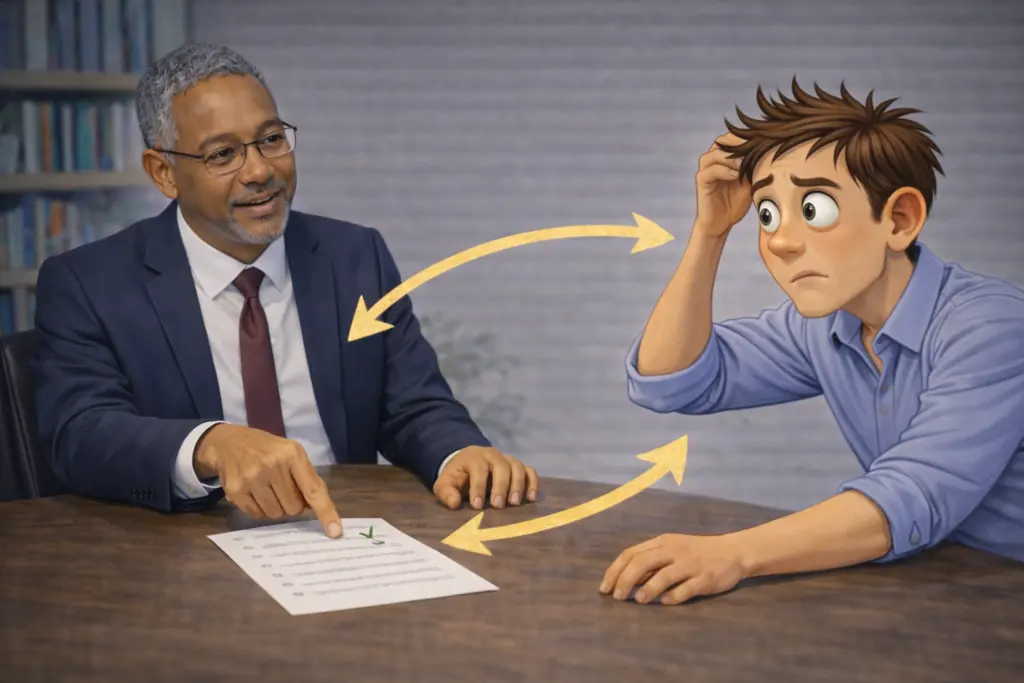
Financial Anxiety in Plain English
Financial anxiety is the sense that money choices are unsafe. It can feel like a tight chest, a racing mind, or a need to escape the topic. It is not a lack of intelligence. It is your nervous system reacting to perceived risk.
It often starts before the meeting. People rehearse worst case outcomes on the train. They picture being told off for past choices. They imagine fees, losses, or awkward questions.
During the meeting, the mind can go blank. Clients may ask the same question twice because the first answer did not land. They may agree too quickly because it feels easier than slowing things down. The room can feel like a test you did not study for.
After the meeting, anxiety can spike again. The recap email feels like homework. Paperwork feels final. And a normal follow up call can feel like pressure.
Financial anxiety is different from normal money stress. Money stress is often about a clear problem, like a bill or a deadline. Anxiety is more about uncertainty and fear of regret.
A client can have a stable income and still feel it. A client can be wealthy and still freeze. The common thread is perceived threat, not the size of the pot.
Why Financial Meetings Trigger Financial Anxiety
Advice meetings can feel high stakes because they touch identity and safety. Retirement planning can sound like “this decides my future”. Even small choices can feel permanent when the topic is life savings.
High stakes thinking narrows attention. People stop hearing nuance. They focus on the one line that sounds scary. That is when financial anxiety takes the steering wheel.
Shame is a quiet driver in many conversations. A client may fear being judged for debt, spending, or lack of knowledge. They may worry they will look careless in front of an expert.
Shame also makes people hide details. They soften the truth about credit cards or cash flow. Then the plan feels less “them”, which increases anxiety later.
Numbers can trigger loss aversion. A projected drop looks like danger, even when it is a normal part of investing. A client can hear “volatility” and translate it as “I could ruin my life”.
Loss focus often blocks balanced thinking. Gains feel abstract. Loss feels personal. That is why risk discussions can create immediate money worry.
Information overload is another trigger. Too many terms, charts, and options can flood working memory. The client may be trying to decode language and make choices at the same time.
Overload creates a loop. When understanding drops, confidence drops. When confidence drops, the brain flags the topic as unsafe. And financial anxiety rises.
Time pressure can cause decision paralysis. If a client senses they must decide today, the safest move becomes doing nothing. “I’ll think about it” is often a stress response, not a rejection.
Paralysis also happens when choices are complex. The client wants certainty but gets trade offs. That gap between “I want to be sure” and “I cannot be sure” produces anxiety.
Past money pain can sit under the surface. Redundancy, a pension mistake, a market crash, or a pushy sales encounter can leave a mark. Even childhood memories of money arguments can prime the body for threat.
Old experiences shape what the client expects now. A calm adviser can still trigger the old pattern. The client is reacting to history as much as the meeting.
Power imbalance matters. The adviser speaks daily finance language. The client may feel they have to keep up. That can make a simple question feel embarrassing to ask.
When people feel “smaller”, they comply. They agree without clarity. Then they go home and worry they have been talked into something, which feeds financial anxiety.
Market noise adds fuel. Headlines, social posts, and group chats create a sense that disaster is close. Clients arrive primed for danger and scan the meeting for bad news.
Noise also makes people chase certainty. They want a prediction. When advisers give honest uncertainty, the client can hear it as risk, which raises money stress again.

Spotting Financial Anxiety in the Room
Clients show it in words. They may say “I’m fine” while asking for reassurance. They may jump from topic to topic to avoid staying with one decision. They may keep asking for more information, but what they need is safety.
Listen for repeated phrases. “What would you do?” can mean “I’m scared to own this”. “Can you just email it?” can mean “I’m overloaded”. These are common signals of financial anxiety.
Clients also show it in behaviour. Some over agree and nod fast. Some become quiet and let the adviser talk. Some use jokes to keep things light.
You may see delay tactics in real time. Checking their phone. Fixing a sleeve. Asking about a detail that does not change the decision. The behaviour is often about relief from pressure.
There are physical signs too. Shallow breathing. Tense shoulders. A fixed smile. These cues matter because the body often tells the truth first.
When the body is stressed, learning drops. The client can hear facts but not absorb meaning. That is why calm delivery and pacing can reduce money worry more than extra data.
What Clients Are Thinking During Financial Anxiety
Many clients are thinking “Am I being judged?” even if they never say it. They scan for tone, facial expressions, and tiny cues. One raised eyebrow can feel like criticism.
This fear makes them edit themselves. They avoid saying they are confused. They avoid admitting they have not opened the pension statement. That secrecy makes the meeting feel heavier.
Another thought is “What if I look stupid?” It can be triggered by acronyms, fast explanations, or charts with no plain summary. The client may believe everyone else understands this stuff.
That belief creates isolation. Isolation increases anxiety. And anxiety makes it harder to ask the very questions that would bring clarity.
Some clients think “What if this proves I’ve failed?” Money is tied to self worth for many people. A shortfall can feel like a moral issue, not a planning issue. That emotional weight is financial anxiety, not maths.
When self worth is on the line, even good advice can sting. The client may hear guidance as blame. They may leave with a plan but also with shame.
The big one is “What if I regret this forever?” Investing and retirement choices can feel irreversible. Clients may picture telling their partner they made the wrong call. Regret fear is a strong driver of decision paralysis.
If regret is the fear, reassurance is not enough. Clients need a decision process that feels fair and clear. That reduces the sense of threat and lowers money stress.

Meeting Moments That Spike Financial Anxiety
The first five minutes often set the tone. Anticipation can be worse than the content itself. A client might arrive already in a stress state, even if the agenda is simple.
Small changes help here. Warm welcome. Clear opening. A short overview of what will happen today. Structure reduces financial anxiety fast.
Fees can trigger fear and defensiveness. People may worry they are being taken advantage of. They may feel awkward discussing cost, even when they can afford it.
If fees are rushed, worry rises later. If fees are explained in plain terms, and linked to value, the client relaxes. Clarity beats charm every time.
Risk discussions are another flashpoint. Words like “loss”, “downturn”, and “drawdown” land emotionally. Clients often hear them as immediate danger, not normal market movement.
Risk is easier when framed as trade offs and ranges. What can happen, what is likely, and what the plan does in each case. That reduces money worry because the path is visible.
Trade offs create internal conflict. Spend now versus later. Help children now versus protect retirement. These choices touch values, not just numbers.
When values clash, people freeze. They feel they must choose the “right” identity. That is fertile ground for financial anxiety.
Paperwork can feel like a point of no return. A client may be calm until the forms appear. Then the body reads it as commitment, even if it is just admin.
Paperwork feels safer with context. Why this form exists. What it changes. What it does not change. That turns a threat cue into a normal step.
Action decisions can be the final spike. “Shall we proceed?” can feel like a cliff edge. The client may want more time, not more information.
A good meeting ends with a clear next step that fits the client’s pace. That reduces decision paralysis and keeps the relationship strong.
Reducing Financial Anxiety Before the Meeting
A calming pre meeting message can change everything. It should tell the client what will happen, how long it will take, and what the meeting is for. It should also say what is not required today.
This reduces threat because the unknown becomes known. It also cuts rumination the night before. Less rumination means less financial anxiety on arrival.
A simple agenda helps clients feel oriented. One page is enough. Use plain headings like “Where you are now” and “Options” and “Next steps”. Add short definitions for key terms.
Definitions reduce shame. They give permission to not know. They also stop the client from guessing what words mean, which lowers money stress.
Ask for worries in advance in a private way. A single question works well, such as “What part of this feels hardest right now?” Clients often share more when they are not face to face yet.
This also helps the adviser lead with empathy. You can address the worry early rather than discovering it at the end. That improves trust and reduces anxiety.
Offer a “no decision today” option. Say it clearly. Many clients relax the moment they know they will not be pushed.
When pressure drops, thinking improves. Clients ask better questions. Decisions become easier because they feel chosen, not forced.

Running the Meeting So Financial Anxiety Drops
Start with emotional permission. A simple line like “Money can feel personal, so if anything feels uncomfortable, tell me” changes the room. It signals safety without being soft.
Safety increases honesty. Clients share real numbers and real concerns. That makes the advice better and reduces money worry later.
Use chunking. One topic at a time. One question at a time. Pause after each section and summarise in a sentence to avoid financial anxiety
Chunking reduces overload. It stops the client drowning in detail. It also helps memory and reduces financial anxiety after the meeting.
Replace jargon with everyday words. If you must use a technical term, translate it right away. Speak as if the client will repeat it to their partner later.
Plain language builds trust. It also removes the fear of looking foolish. When language is clear, client confidence rises.
Keep choices to three or fewer. Too many options feel like risk. Present a recommended path with two alternatives, not a buffet.
Limited options reduce decision paralysis. The client can compare. They can ask better questions. They feel less trapped.
Use visuals that calm, not scare. A simple timeline, a one page summary, and a before and after scenario can work well. Avoid charts that need a lecture to decode.
Visuals reduce cognitive load. They let clients “see” the plan. That supports calm decision making and lowers money stress.
Build micro certainty. Repeat what is known, what is unknown, and what you will do next. Clients cope well with uncertainty when the process is clear.
Micro certainty reduces rumination. It stops the mind filling gaps with fear. That is a direct hit on financial anxiety.
Check understanding without testing the client. Ask “What part feels unclear?” or “What’s your main worry about this?” Avoid questions that imply they should already know.
This protects dignity. It keeps the client engaged. And it builds a sense of partnership rather than hierarchy.
End with a short recap and one clear next action. Keep it simple. Confirm what happens, who does what, and when.
A clean ending reduces the after meeting spike. Clients leave feeling held, not hurried. That makes follow through more likely.
After the Meeting When Financial Anxiety Returns
Many clients feel a second wave of worry later. The meeting ends, adrenaline drops, and the brain replays the conversation. Small uncertainties start to feel large.
A short follow up within 24 hours helps. It should recap the key decisions, the reasons, and the next steps. It should avoid extra detail that creates more questions.
A “you can pause” message also helps. Remind clients they can take time. Remind them that slowing down is allowed. That reduces perceived pressure.
This also prevents avoidance. When people feel trapped, they disappear. When they feel choice, they stay engaged.
A one page summary works well for many clients. It should include goals, the chosen path, and what success looks like. Add a short section for “what we are watching” in plain terms.
This reduces rumination because the plan is visible. It also helps clients explain it to family. That supports trust and reduces money worry.
When Financial Anxiety Turns Into Avoidance
Avoidance often looks like ghosting. The client does not reply. They miss a call. They say they are busy. Many advisers assume disinterest, but it is often stress.
Financial anxiety can make simple tasks feel heavy. Signing a form feels like stepping into danger. Even opening an email can trigger a spike of worry.
Re engage without pressure. Use one simple question. For example, “What feels hardest about moving forward right now?” Keep the tone calm and direct.
This invites honesty. It also signals you are not chasing a sale. Clients are more likely to reply when they feel safe.
If delaying becomes a pattern, change the process. Reduce choices. Shorten meetings. Use smaller actions. Agree a pace that suits the client.
You can also name the pattern gently. Not as blame, but as observation. That can reduce shame and rebuild trust.
A Simple Checklist For Financial Anxiety In Every Meeting
Safety first. Start with permission. Make it clear the client can slow down. Keep your tone steady and your language simple.
Safety reduces threat. When threat drops, clients can think. That is the foundation for reducing financial anxiety.
Simplicity next. One topic at a time. One decision at a time. Summarise often. Put key points in writing.
Simplicity reduces overload. It also improves recall. And it lowers money stress after the meeting.
Small steps matter. Break actions into the smallest sensible moves. Agree what happens this week, not this year. Keep momentum without pressure.
Small steps reduce decision paralysis. They turn fear into progress. Progress builds confidence.
End with clear next action. Confirm who does what and when. Confirm how the client can ask questions between meetings.
Clear next action prevents rumination. It reduces regret fear. It helps clients stay engaged and calm.
FAQ on Financial Anxiety
What is financial anxiety, and why does it feel physical?
Financial anxiety is a fear response linked to money decisions. It can show up as a tight chest, a racing mind, or a blank feeling in the moment. The body reacts because the brain reads money risk as a safety threat. It is common, even for high earners. It often improves when the process feels clear and non judgemental.
Why do financial planning meetings trigger money worry even with a trusted adviser?
Meetings combine uncertainty, high stakes, and complex language. Fees, risk talk, and paperwork can feel final. Many clients also carry shame from past choices or past experiences. Add market headlines and the stress can rise fast. A clear agenda, plain language, and slower pacing can reduce that anxiety.
How can an adviser reduce financial anxiety without ignoring the facts?
Start by making the meeting feel safe and structured. Use plain words, limit options, and summarise often. Explain trade offs and ranges, not predictions. Give clients time, and remove any sense of being pushed. Follow up with a short recap and one clear next step. This keeps the facts, but lowers the threat.
UK Sales Training Tailored To Your Business
If you’re looking for UK sales training that reflects the way your business sells, I deliver practical programmes from sales training in Mansfield for companies investing in sales training in Nottingham, sales training London and organisations across the UK. Every workshop is tailored to your buyers, products and commercial objectives, whether delivered face-to-face or through online sales training courses.
I provide specialist financial adviser sales training, mortgage adviser sales training, insurance broker sales training, SaaS sales training, IT sales training and telecoms sales training. Businesses wanting corporate sales training courses receive bespoke programmes that improve sales conversations, strengthen value communication and increase conversion rates without pressure.
Discover how Master Your Pitch can help prospects understand your value more quickly.
Need help choosing the right programme? Book a call and let’s discuss the best option for your business.

Other Useful FAQs
Why do adviser websites lose prospects?
Traffic isn’t the problem. Clarity is. Most adviser websites look fine but fail to answer the real questions prospects have. This article explains why prospects leave and what advisers miss. Read why adviser websites lose prospects.
Why do clients say yes and then disappear?
A yes isn’t a decision. It’s often relief in the moment. This article explains why clients agree, vanish, and what that behaviour really signals. Read why clients say yes then disappear.
How do you follow up without sounding desperate?
Most follow ups feel awkward because they’re framed wrong. This article shows how advisers follow up calmly, clearly, and without pressure. Read how to follow up without sounding desperate
Why do clients disengage after the suitability report?
The report makes sense to advisers, but it often overwhelms clients. Too much detail too late creates doubt, not confidence. This article explains why disengagement happens after the report and what advisers miss. Read why clients disengage after the suitability report.
What follow up mistakes cause clients to ghost?
Most ghosting happens after the meeting, not during it. Poor timing, vague messages, and pressure signals push clients away. This article breaks down the follow up mistakes that cause silence fast. Read follow up mistakes that cause ghosting.
How should advisers handle the “I need to talk to my partner” objection?
This objection isn’t resistance. It’s uncertainty. This article explains what clients really mean when they say it and how advisers respond without pushing or losing momentum. Read the “I need to talk to my partner” objection
How do advisers close clients while staying compliant?
Compliance isn’t the blocker. Unclear structure is. This article explains how advisers guide decisions, stay within the rules, and avoid deals stalling at the end. Read how advisers close clients while staying compliant.
How do advisers influence decisions ethically?
Clients don’t need persuading. They need clarity. This article shows how advisers influence decisions in a calm, ethical way without pressure or tactics. Read how advisers influence decisions ethically.
How do advisers close clients without being pushy?
Being non pushy doesn’t mean being passive. This article explains how advisers help clients decide without chasing, nudging, or forcing the close. Read how advisers close clients without being pushy.
How do advisers sell by having better conversations?
Selling doesn’t fail because of price or competition. It fails because conversations drift, overload, or lose direction. This article explains how advisers win work by changing how they talk, not what they sell. Read how advisers sell by having better conversations.
How does fear affect financial advice decisions?
Most clients don’t struggle with logic. They struggle with fear of getting it wrong. This article explains how fear shapes decisions and what advisers unknowingly do to increase it. Read how fear affects financial advice decisions.
How do advisers explain fees without creating fear or resistance?
Fee conversations often trigger tension because they’re framed badly. This article shows how advisers explain fees calmly so clients stay open instead of defensive. Read how to explain fees without creating fear or resistance.
What expert advice is there on dealing with financial anxiety outside financial meetings?
This is what forbes says.