Want to see how online sales training can help teams simplify offers without sounding pushy?
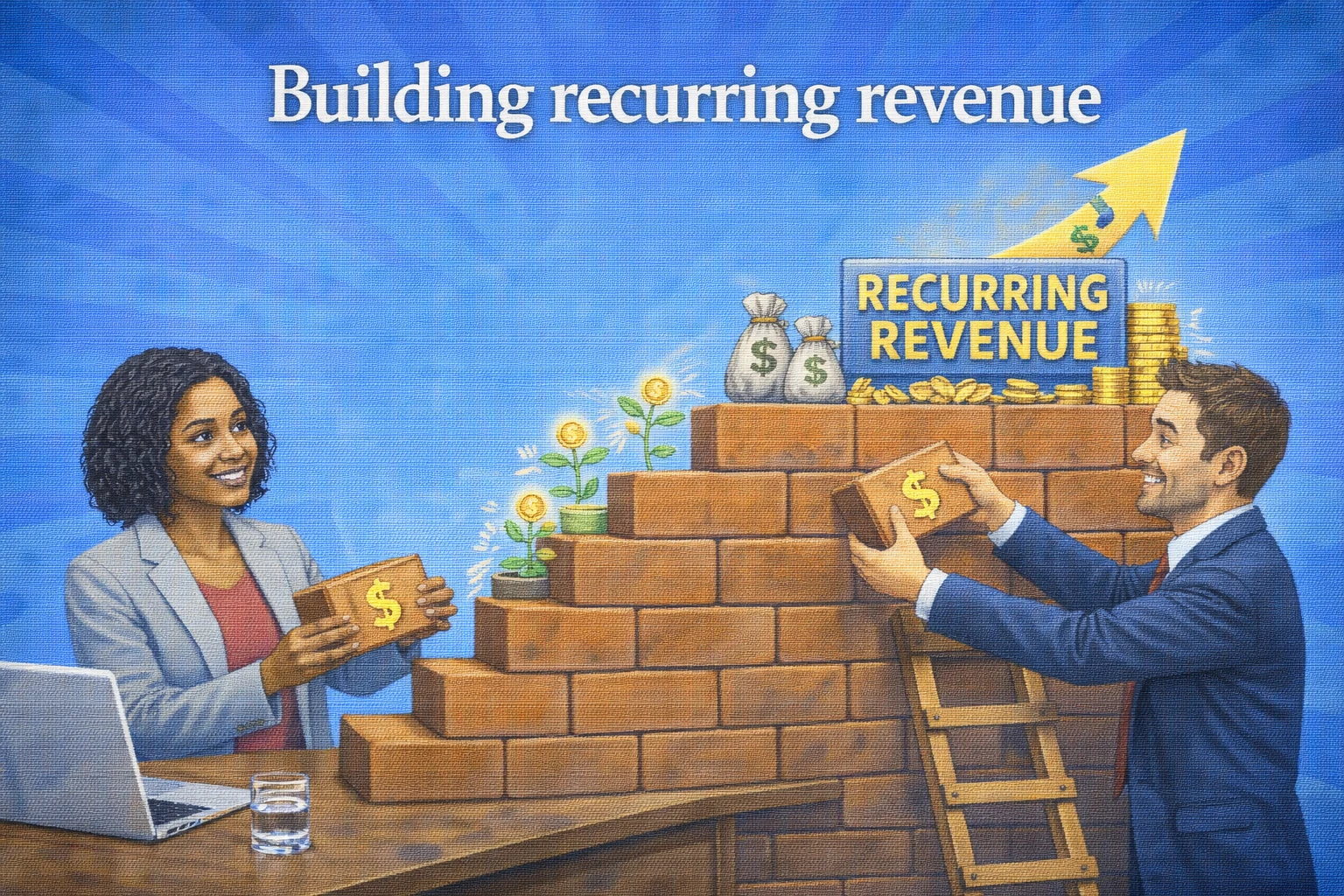
Introduction of Building recurring revenue
Building recurring revenue feels like the thing you should already have sorted. But your income still swings month to month. That gap creates stress, not growth. This article shows you how to turn steady advice into steady fees.
Many financial advisers do great work, yet clients still treat it like a one off event. They come for a pension review, then disappear. You do the right thing, then you start again from zero. Building recurring revenue fixes that by making your value feel ongoing, not occasional.
You might also find clients say yes in the meeting, then go quiet later. Or they choose a cheaper option that does less for them. That is often confusion, not price. A clear ongoing service and clear words reduce hesitation.
If you want predictable income, you need a model clients understand and trust. You also need a service that feels worth paying for every month or year. Building recurring revenue becomes easier when your offer, pricing, and conversations all point in one direction. That is what we will cover.
As this is what Forbes advisers say about client retention, long term relationships grow when experience and trust come first, which is exactly why consistent communication and structured sales training supports stronger recurring revenue and client loyalty

Building recurring revenue and what it means in an advice firm
Building recurring revenue in an advice firm means you are paid for ongoing guidance, not just one off work. It is the income that keeps coming because clients stay. That could be a service plan, a retainer, or an ongoing advice fee. The point is stability and capacity planning.
One off fees can still matter, but they do not create predictable cash flow. Recurring fees let you invest in service, people, and better systems. They also reduce the pressure to chase new business every week. That calmer base improves client experience.
Building recurring revenue also depends on knowing the difference between repeatable and repeatable value. A repeatable task is not enough. Clients pay again when the outcome stays relevant, like better decisions, fewer mistakes, and clearer next steps. That is the real shift from project work to ongoing advice.
Recurring income also changes the choices you make. It pushes you to be consistent with reviews, contact, and follow through. It rewards clear service promises. And it keeps your business less exposed to market noise and seasonal enquiries.
Building recurring revenue is easiest when you pick the right source of ongoing income for your firm. Many advisers start with an ongoing service fee tied to a review cycle. Some prefer a fixed retainer that suits busy professionals. Others use an assets based fee where it matches the service.
Each source has trade offs. A retainer feels simple, but you must define scope. An assets based fee can be familiar, but clients still need to feel the service, not just the portfolio. A service plan can be clear, but only if the tiers make sense. Fit matters more than fashion.
Building recurring revenue often fails because the offer starts with the product, not the person. Clients hear features, not outcomes. They do not know what they are paying for after the first meeting. That uncertainty makes ongoing fees feel optional.
Another common failure is vague language. Advisers say things like ongoing support, tailored advice, and regular reviews. That sounds nice, but it does not feel concrete. Clients stay when they can picture what happens next and why it helps them. Clarity beats cleverness.
Building recurring revenue when trust is the real blocker, not pricing
Building recurring revenue can stall even when your pricing is fair. The real issue is that clients fear making the wrong choice. They worry about being locked in. They worry you will vanish once the paperwork is done.
Trust grows when you show your process and stick to it. Clients want to know how decisions will be made, not just what you recommend. They also want to know you will keep them safe from rushed choices. That is what makes an ongoing fee feel sensible.
Building recurring revenue also depends on how clients feel in the moment of choice. Many people freeze when money and uncertainty meet. They delay because delay feels safer. That is decision paralysis, and it is common in financial decisions.
You reduce that freeze with clear steps and fewer moving parts. Use plain language. Keep choices limited. Make the next step easy and low risk. This makes ongoing advice feel like support, not pressure.
Building recurring revenue improves when you understand why clients say I will think about it. It is rarely a true need for more time. It is often a sign that they do not yet see the value, or they do not trust the outcome. Sometimes it is a sign they fear judgement.
You can handle it by making the choice feel safer. Restate the goal in their words. Explain what happens if nothing changes. Then explain the first small step, not the whole journey. People move when the next step feels simple.
Building recurring revenue grows when clients feel safe. Safety comes from clarity, proof, and consistency. Clarity is what you do and why it matters. Proof is stories, results, and visible work. Consistency is doing what you said you would do.
Safety also comes from how you show up. Calm tone. Honest trade offs. Clear boundaries. A client who feels safe is more likely to stay, refer, and accept a premium service. That is how recurring income becomes reliable.

Building recurring revenue by choosing the right model
Building recurring revenue often starts with a service plan. A service plan works when you can describe it in one sentence. It should say who it is for, what changes for them, and how often you meet. It also needs a clear review rhythm.
Clients like service plans because they feel structured. They know what support looks like across the year. You must still show outcomes, not admin. If it feels like paying for meetings, it will be questioned. If it feels like paying for better decisions, it will stick.
Building recurring revenue can also come from a fixed retainer. Retainers suit clients who want steady access and quick answers. They work well for business owners, senior professionals, and families with ongoing complexity. They also suit firms that want simple forecasting.
The risk with a retainer is scope creep. You need clear rules on what is included and what triggers extra work. You also need a service promise that does not depend on you being always on. A good retainer feels like peace of mind, not a hotline.
Building recurring revenue through an assets based ongoing fee can fit well when portfolio work is central. Many clients already understand this model. But understanding is not the same as valuing it. You still need to connect the fee to real service.
That means you show reviews, risk checks, tax planning, and decision support in plain terms. You show the work you do when markets drop. You explain how you stop emotional reactions turning into costly moves. This gives the fee meaning beyond a percentage.
Building recurring revenue can be built by moving from project work to a plan. A client might start with a one off retirement plan or cashflow piece. That project creates momentum and trust. Then you offer ongoing support to keep the plan alive.
The handover must be smooth. Show what changes after the project ends. Tie the ongoing service to the risks that return each year, like tax, life changes, and market shifts. People pay again when the future still needs guidance.
Building recurring revenue can include partnership income, but it needs care. Introducer relationships can bring steady enquiries. Some firms also have ongoing agreements for joint work with accountants or solicitors. This can create repeat business rather than one off referrals.
The key is fit and trust. Partners must match your standards and client type. The arrangement must be transparent to the client. And your own service must still be strong, because a weak experience kills long term value. Recurring income should never come from hidden deals.
Building recurring revenue with offers clients grasp in 10 seconds
Building recurring revenue is harder when you describe what you do as tasks. Clients do not buy tasks. They buy outcomes like confidence, control, and a clear plan. So package the result, not the activity.
This changes your wording. Instead of portfolio reviews, talk about keeping risk aligned with their life. Instead of annual meetings, talk about staying on track as things change. The aim is to make ongoing advice feel useful now. Not someday.
Building recurring revenue improves when your offer has clear edges. Clients want to know what is included and what is not. This reduces fear of surprise fees. It also reduces your own delivery stress.
Clear edges also make your firm look more professional. You can say no without sounding awkward. You can show a plan for what happens next. And you can avoid misunderstandings that lead to complaints or churn. Boundaries protect trust.
Building recurring revenue depends on explaining ongoing value without sounding salesy. The easiest way is to describe what you stop from happening. People pay to avoid expensive mistakes. They pay to avoid panic moves in volatile markets. They pay to avoid tax surprises.
You can also describe value as support during change. New job. Inheritance. Divorce. Business sale. The work is not a list of meetings. It is decision support at the moments that matter. That is a service worth keeping.
Building recurring revenue often includes a premium option. But premium only works when the difference is clear. Clients should see what extra attention, planning depth, and speed they get. They should also see who it is for.
Do not apologise for premium. Explain the fit. Some clients need it because their life is complex. Others need it because they want proactive planning. When the fit is clear, the price feels fair. And your best clients self select.
Building recurring revenue with pricing that works and feels fair
Building recurring revenue fails when you price below what your service needs. A minimum fee protects quality. It stops you packing your diary with low margin work. It also sets a standard for who you serve.
Minimum fees also make your time more honest. You can give proper attention without rushing. You can plan and follow through. And you can invest in better client experience. Low fees often create low trust because clients assume they get less.
Building recurring revenue becomes easier when you use tiers. Tiers give clients a clear choice without endless custom quotes. A simple good, better, premium structure works well. Each tier should change in a meaningful way.
Meaningful changes could be review frequency, access, planning depth, and who is involved in your team. Do not add fluff like extra reports. Add things that change decisions. And keep the wording simple so clients can choose fast.
Building recurring revenue also means handling objections well. When a client says we do not need ongoing advice, they might mean they do not see the point. Or they might be protecting themselves from a commitment. Either way, treat it as a clarity gap.
Ask what they think ongoing advice would look like. Then show what real life changes do to a plan. Tax rules change. Goals change. Markets change. People change. Ongoing advice is not a luxury, it is maintenance for decisions.
Building recurring revenue often improves when you offer both annual and monthly payment options. Annual payments can reduce admin and increase commitment. Monthly payments can reduce friction and help clients start. Both can work.
Choose based on your client type and your capacity. If you offer monthly, make the service feel active through the year. If you offer annual, make the renewal feel like a review of value, not a silent rollover. Payment method should match service rhythm.

Building recurring revenue with onboarding that prevents churn
Building recurring revenue depends on what happens right after the client says yes. The first 30 days sets the tone. Clients want to feel progress fast. They want to feel seen and guided.
So give them a clear welcome, a timeline, and the next meeting date. Remind them what you heard and what the goal is. Keep it short and clear. Early confidence reduces early doubt.
Building recurring revenue suffers when clients expect instant miracles. If you do not set expectations, they fill the gap with hope. Then reality feels like disappointment. That can lead to silent churn later.
Set expectations in plain terms. Explain what will change now, what will take time, and what needs their input. Explain the purpose of each step. When clients know the pace, they stay calmer. Calm clients stay longer.
Building recurring revenue improves when you show a yearly plan. Clients want to know what you will do every year. They want to see a cadence, not vague support. A simple annual map gives them confidence.
That map can include reviews, tax checks, protection reviews, and life change prompts. Tie each item to a real outcome. Explain what decisions it supports. Then the ongoing fee feels linked to action. Not just availability.
Building recurring revenue grows when you prove value without drowning clients in long reports. Most clients do not want more documents. They want clarity. They want a short summary they can remember.
Use short updates. Use plain language. Show what changed, what did not, and what you will do next. Keep a record of decisions and why they were made. This creates visible value without overload.
Building recurring revenue through adviser client conversations that retain
Building recurring revenue is supported by a renewal conversation, even if the service auto renews. Clients still need a moment of reflection. They need to hear what was achieved and what is next. This keeps the relationship active.
Make the renewal feel like a checkpoint. Remind them of the goal. Show the work done in simple terms. Then point to what is coming in the next year. A client who sees a future plan is less likely to leave.
Building recurring revenue also depends on how you talk about fees. If you sound uneasy, clients feel risk. If you sound clear and calm, clients feel safety. Confidence is not aggression. It is clarity.
Say what the fee covers and what it protects them from. Use examples of decisions you helped with. Show how you support them when life shifts. Then the fee feels like a service, not a cost. That reduces pushback.
Building recurring revenue can be lost through quiet quitting. Some clients stop replying. They still pay, but they disengage. Disengagement is often the first step towards leaving. It can also create compliance risk.
Spot it early. Watch for missed meetings, slow replies, and vague answers. Reach out with a short message that makes it easy to respond. Offer a quick check in, not a big review. Small contact keeps the relationship warm.
Building recurring revenue can grow through ethical upsells. Upsell only when it truly improves outcomes. That could be more proactive planning, faster access, or deeper work on a complex area. Make the reason clear.
Explain the gap the current level cannot cover. Explain what changes with the higher tier. Give the client time to think, without pressure. When upsell is framed as fit, it feels respectful. Respect builds long term value.
Building recurring revenue with marketing that attracts the right clients
Building recurring revenue improves when you are clear who it is not for. Some people want quick answers and minimal contact. Others want the cheapest option. Those clients will often resist ongoing fees and add strain.
Say it plainly. Your ongoing service is for clients who want guidance, not just a product. It is for people who value planning and steady decision support. This filters enquiries. It also makes sales conversations easier.
Building recurring revenue grows when your messaging is clear early. Clients should understand your offer from your website and first call. They should know the problem you solve and the plan you follow. Clarity reduces drop off.
Avoid long claims and vague promises. Use simple lines that show how you work. Show what happens first, second, and third. Add proof like reviews and client stories. This builds credibility before the meeting.
Building recurring revenue is supported by content that moves people from curious to committed. Good content reduces fear and confusion. It shows how decisions work and why people delay. It makes complex advice easier to grasp.
Write about real moments. Market drops. Retirement timing. Inheritance choices. Tax year planning. Show the cost of waiting and the relief of a plan. Then invite them to a clear next step. Content should lead to action.
Building recurring revenue also grows through referrals. Happy clients often know people like them. But they need a reason and a moment to refer. Do not hope referrals happen by accident.
Ask at the right time. After a clear win. After a calm review. After a fast fix during a stressful moment. Make it easy with a simple message they can forward. Referral systems create steadier growth than random requests.
Building recurring revenue by tracking the numbers that matter
Building recurring revenue needs measurement, even if you do not use MRR or ARR labels. You need a clear view of recurring fees across your client base. You need to see what is stable and what is fragile. This helps forecasting.
Create a simple monthly view of ongoing fees, new recurring starts, and losses. Track upgrades and downgrades. Track the number of clients in each tier. The point is visibility, not complexity. Visibility drives better decisions.
Building recurring revenue also depends on revenue per client and capacity. A full diary does not mean a healthy business. You can be busy and still underpaid. Capacity planning keeps service quality high.
Know how many clients you can serve well at each tier. Know how much time each tier needs across a year. Then price and minimum fees become easier to defend. This also reduces burnout. Burnout harms client retention.
Building recurring revenue is harmed by churn, so track it. Churn is not just cancelled clients. It includes downgrades, pauses, and disengagement. It tells you where value feels unclear.
When churn rises, check the reasons. Was the onboarding weak. Was contact too light. Did the service feel quiet for months. Fixing churn is often easier than finding new clients. Retention is growth.
Building recurring revenue can also be seen through upgrades and downgrades. Upgrades can show trust and rising complexity. Downgrades can show price pressure or unclear value. Both give you signals.
Use those signals to refine your tiers and messaging. If clients upgrade after a certain type of meeting, repeat what worked. If clients downgrade after long quiet periods, add simple touchpoints. Small changes can lift retention fast. This is how predictable income improves over time.
Building recurring revenue with compliance and delivery realities
Building recurring revenue must be matched with clear scope. Scope protects clients and protects you. It sets expectations about advice, response times, and what is outside the service. It stops disputes.
Keep scope in plain English. Avoid long legal style lines that clients ignore. Use simple examples of what is included. Use simple examples of what is not. Clarity reduces complaints and drop off.
Building recurring revenue also relies on documenting what you promise. If you say ongoing reviews, define the frequency. If you say proactive contact, define what triggers it. If you say planning, define the areas. Written promises build confidence.
Documentation does not need to be heavy. It needs to be clear and consistent. Clients should be able to read it and nod. Your team should be able to deliver it without guessing. Consistency protects your reputation.
Building recurring revenue is strongest when value is evidenced. This means you keep records of decisions, changes, and outcomes. It means you can show what you did and why it mattered. This is helpful for clients and for oversight.
Evidence can be simple. A short meeting summary. A clear action list. A note on what changed and what stayed the same. A yearly recap that links work to goals. Clients stay when they can see progress.
Building recurring revenue with a 90 day rollout plan
Building recurring revenue starts with choosing a model and drafting tiers in week one and two. Keep it simple. Pick one core model, then build tiers around it. Write the offer in plain language.
Test the offer on real client questions. If you cannot explain it in one breath, it is too complex. Tighten the scope. Tighten the outcomes. Make sure each tier has a clear fit. This early work saves months later.
Building recurring revenue needs clear messaging and a simple pricing page in week three and four. Clients should see what they get, who it is for, and what it costs. They should also see the next step. Confusion kills momentum.
Keep the page short. Use outcomes. Use a clear review rhythm. Add proof like reviews and a short case story. Then your first call becomes easier. People arrive with fewer doubts.
Building recurring revenue grows in month two when you move new clients onto the model. New clients are the easiest place to start. They are already making a decision. They have not built old expectations.
Make the choice clear at the right time. Present tiers with calm confidence. Tie the recommendation to their situation. Then confirm the next meeting date. A clear start improves retention.
Building recurring revenue can scale in month three when you transition existing clients. This needs care because change can trigger worry. Show what stays the same and what improves. Show why it is better for them.
Offer a simple path to move across. Give a review meeting that frames the change as clarity, not a price move. Be honest about who is a fit and who is not. A good transition protects trust and keeps your best clients.
FAQ on building recurring revenue for financial advisers
How can financial advisers start building recurring revenue when clients only want one off advice?
Financial advisers should begin with a one off project that naturally leads into ongoing support. A retirement plan, tax strategy, or investment review creates future decision points that need regular attention. Then explain what risks return each year and how ongoing advice keeps the plan on track. Sales training helps financial advisers position recurring revenue as protection and continuity, not a sales upgrade.
What should financial advisers include in an ongoing service to reduce client churn?
Financial advisers should offer a clear annual plan, structured reviews, and decision support when life or markets change. Clients also need to see progress between meetings through short updates and proactive contact. Expectations should be clear from the start so the service feels active, not quiet. Sales training helps financial advisers communicate ongoing value consistently so clients feel supported and understood.
How should financial advisers explain ongoing fees without sounding pushy or salesy?
Financial advisers should use simple language and focus on outcomes rather than tasks or activity. Explain what the ongoing fee protects clients from, such as rushed decisions, tax mistakes, or emotional reactions to market noise. Show the process, the review structure, and what happens next so the service feels predictable and safe. Sales training helps financial advisers talk about fees with calm confidence so ongoing advice feels like support, not selling.
Sales Training UK For Ambitious Sales Teams
If you’re searching for sales training for UK teams, I deliver practical programmes tailored to your products, buyers and commercial goals. Based in sales training Mansfield, I regularly work with businesses looking for Nottingham sales training, sales training in London and organisations across the UK. Training is available on-site or through online sales training.
I provide specialist sales training for financial advisers, sales training for mortgage advisers, sales training for insurance brokers, SaaS sales training, IT sales training and telecoms sales training. Businesses also choose corporate sales training to improve sales conversations, communicate value more clearly and increase conversion rates without pressure.
Find out how Master Your Pitch can help prospects understand your value from the very first conversation.
Ready to improve your team’s results? Book a call and let’s discuss the best programme for your business.

Other Useful FAQs
How do you convert more enquiries into clients?
Enquiries often stall because the process feels inconsistent or reactive. This article explains a clear structure advisers can use to turn more interest into decisions. Read converting enquiries playbook for more clients.
What marketing actually works for financial advisers?
Doing more marketing doesn’t fix an inconsistent pipeline. This article explains how advisers focus on the activities that attract the right enquiries and lead to real conversations. Read marketing for financial advisers.
What discovery meeting mistakes cost financial advisers clients?
A weak structure creates confusion early and reduces confidence before the advice is even discussed. This article explains the common discovery mistakes and how to run meetings that build trust from the start. Read discovery meeting structure mistakes advisers make.
How do financial advisers improve client retention?
Clients rarely leave because of performance alone. They leave when communication and engagement fade. This article explains how advisers keep clients confident, valued, and loyal over time. Read client retention for financial advisers.
When should financial advisers say no to small clients?
Trying to serve everyone stretches time, energy, and service quality. This article explains when to step back, how to handle the conversation, and how focusing your client base supports growth. Read saying no to small clients.
How do financial advisers position themselves as premium?
Strong advice alone doesn’t justify higher fees if your positioning feels the same as everyone else. This article explains how advisers stand out, communicate value clearly, and attract clients who expect a premium service. Read premium positioning for financial advisers.
How do financial advisers define their ideal client?
Without a clear profile, enquiries feel random and time gets wasted on poor fit conversations. This article explains how to identify your ideal client so your marketing and meetings attract the right people. Read ideal client profiling for financial advisers.
How can advice firms handle consolidation without losing clients?
Mergers and acquisitions create uncertainty that can trigger client exits. This article explains how firms communicate change, protect trust, and keep relationships stable during consolidation. Read advice firm consolidation without losing clients.
How do financial advisers improve lead funnel conversion rates?
Many firms have traffic and enquiries but too few clients. The issue is usually where prospects stall between interest and decision. This article explains how to spot the weak points and improve your lead funnel conversion. Read lead funnels and conversion rates for financial advisers.
What is the advice gap and how do advisers fix it?
The advice gap happens when prospects see your expertise but don’t feel the value enough to act. This article explains why engagement drops and how to close the gap so good prospects move forward. Read fix the advice gap for financial advisers.
How does Consumer Duty affect how advisers explain their value?
Consumer Duty raises the standard for proving value, not just stating it. This article explains how to communicate outcomes clearly so clients understand, trust the advice, and see the benefit. Read Consumer Duty and explaining value to clients.
How do advisers successfully move from commission to planning fees?
Moving to planning fees can feel risky when income has been product based. This article explains how advisers make the shift while keeping clients confident and protecting revenue. Read moving from commission to planning fees.
How can financial advisers sell without feeling pushy?
Many advisers feel resistance the moment a conversation turns toward a decision. This article explains how to guide clients forward naturally, without pressure or sales tactics. Read sales without selling for financial advisers.