
Want to see how online sales training can help teams simplify offers without sounding pushy?
Introduction – I can do this myself objection
You hear it mid call, i can do this myself objection, and the tone changes. The client sounds calm, but the room gets tense. If you push, they resist. If you back off, you lose control of the conversation.
Most advisers treat the DIY investing objection like a price problem. It is often a trust problem, or a clarity problem, or a fear of making the wrong move. The client may be running self managed finances, but they want to feel safe. This article shows you how to respond without sounding defensive.
When someone says why need an adviser, they are not asking for a lecture. They are asking if your advice has a point beyond products and paperwork. If you answer with features, they switch off. If you answer with a simple process, they lean in.
You will leave with short scripts, clean questions, and ways to explain the value of advice. You will learn how to handle reassurance seeking and decision paralysis without pressure. And you will handle i can do this myself objection so it feels like a normal part of a professional conversation.
As this is what Forbes Advisor says about DIY investing, complexity and personal circumstances often drive people back to professional support, and advisers who reinforce that reality through consistent sales training typically see stronger client retention and long term relationships.

What the i can do this myself objection really means
The i can do this myself objection often means, I do not want to be sold to. It can also mean, I do not yet see what I am paying for. Some clients have had bad experiences and now protect themselves with DIY language. Your job is to hear the meaning, not just the words.
The DIY investing objection also shows up when clients feel exposed. They may be doing self managed finances, but they do not want to admit they are unsure. Or they want a second opinion without losing control. When you treat it as reassurance seeking, your response gets calmer and more effective.
Start with agreement for the i can do this myself objection
A strong opening for the i can do this myself objection starts with agreement. You can say, You probably can, many people can. That one line lowers the shield and stops it becoming a debate. It also keeps you in the role of guide, not salesperson.
Then you add one sentence that makes your point without pressure. You can say, The real question is whether you want to do it alone, or do it with a process. That frames value of advice as coaching vs product. It also supports clients who want DIY control with professional reassurance.
The question flow for the i can do this myself objection
When the i can do this myself objection lands, ask what DIY actually means to them. Some mean choosing funds. Others mean planning, taxes, and withdrawals. When you learn their definition, your reply stops being generic.
Next, ask what outcome they want and what worries them. This pulls out decision paralysis, fear of regret, or a past mistake. Then ask what would make them feel confident they are not missing anything. These questions make why need an adviser feel like a sensible check, not a sales step.
Where the DIY investing objection usually breaks
The DIY investing objection often breaks during stress. People say they will stay calm, but markets test behaviour. Panic selling, chasing what did well, and freezing are common. That is not a knowledge issue, it is a human issue.
It also breaks when life gets messy. Redundancy, inheritance, divorce, illness, or caring duties change everything. The plan that looked fine becomes unclear. This is where the i can do this myself objection can turn into, I wish I had support earlier.
Coaching vs product in the i can do this myself objection
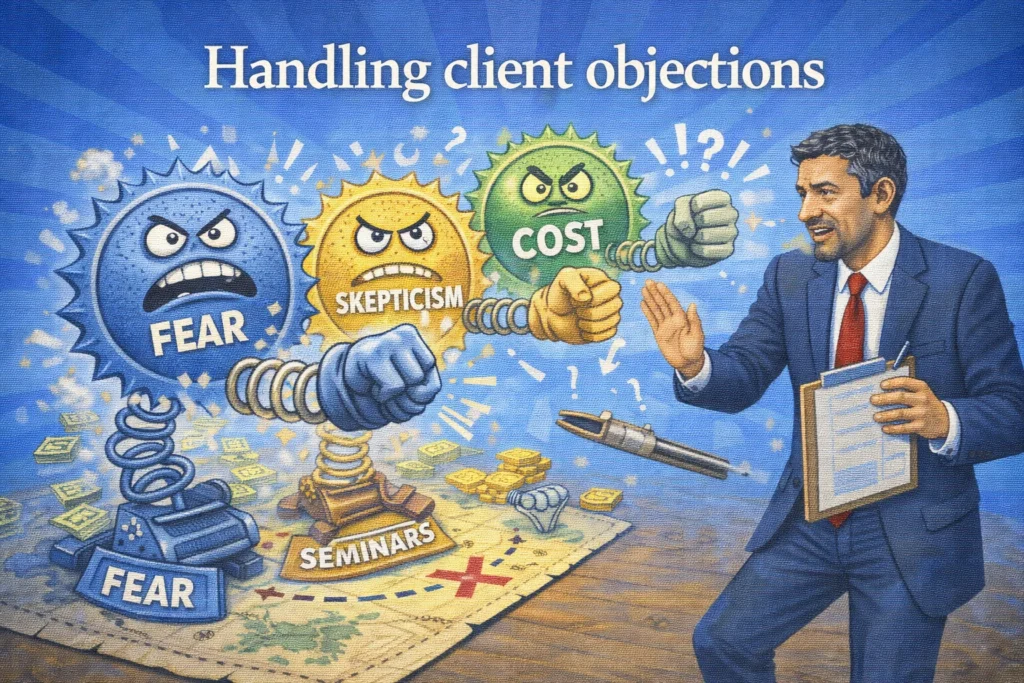
If a client raises the i can do this myself objection, they may think you sell products. So make the difference clear. Advice is not a fund, it is judgement, sequencing, and choices under pressure. It is the bit that stops small errors becoming expensive ones.
Coaching also reduces second guessing. Many people with self managed finances are tired of thinking about it every week. They want a clear plan and fewer decisions. When you frame it like this, the DIY investing objection softens because it feels practical.
Explain value of advice without performance claims
The i can do this myself objection can tempt you to talk about beating the market. Do not. Instead, talk about doing the right things, in the right order, for their life. Talk about tax decisions, allowances, wrappers, and withdrawal sequencing.
Then talk about behavioural support. One poor decision in a drop can wipe out years of good saving. A calm process can stop that. This is value communication that fits why need an adviser without sounding like a promise.
Response scripts for the i can do this myself objection
Here is a simple script for the i can do this myself objection. You can say, You probably can, the question is whether you want to do it with a plan and a second pair of eyes. Then ask, Which parts do you feel confident doing, and which parts do you want checked. It feels respectful and keeps the conversation moving.
Here is a second script that keeps DIY control. You can say, You stay self managed, I help you stress test the plan and keep it on track. Then ask, If we could remove the biggest blind spots, would that be useful. This frames coaching vs product and supports reassurance seeking.
Self managed finances options around the i can do this myself objection
Not every client needs full ongoing service after the i can do this myself objection. Give choices that match how they think. Offer a one off plan, a second opinion, or an annual review. These options make it easier to say yes without feeling trapped.
You can also separate advice from execution. Some clients want to keep the platform and do the trades. They still want clarity, structure, and calm decisions. Position this as support for self managed finances, not a downgrade.
Handle why need an adviser without sounding defensive
When someone says why need an adviser, do not defend yourself. Move to the client’s future and what they are protecting. You can say, Most people can invest, fewer people keep a plan through change. That keeps the i can do this myself objection in perspective.
Then use a regret frame without fear mongering. You can say, The cost is rarely the fund choice, it is the timing, taxes, and rushed decisions. Ask what would count as success for them in five years. That turns the DIY investing objection into a goals conversation.

Decision paralysis inside the i can do this myself objection
Sometimes the i can do this myself objection is code for, I am stuck. They are overwhelmed by choices and scared to pick wrong. They hide that by saying they will do it later. Your job is to spot the delay and reduce the load.
You can do this by shrinking the next step. Offer one decision today, not ten. Summarise their goal in plain language, then ask for a simple yes or no. This helps decision paralysis while keeping self managed finances on the table.
Mistakes advisers make with the i can do this myself objection
A common mistake is arguing. When you argue with the i can do this myself objection, the client has to win to save face. Another mistake is dumping information, which increases doubt. Too much detail can feel like pressure.
Another mistake is jumping to fees or service levels too early. The client has not accepted value of advice yet. Keep the focus on outcomes, risks they care about, and the process you follow. Then the DIY investing objection becomes a discussion, not a standoff.
Mini case examples that relate to the i can do this myself objection
One client handled self managed finances well for years, then froze during volatility. They stopped investing and sat in cash for months. Their plan drifted and anxiety rose. The i can do this myself objection was really fear of making a bad move.
Another client did DIY investing and kept changing funds based on headlines. Returns were fine, but taxes were messy and the withdrawals were unplanned. They wanted a calmer path and fewer decisions. Once they saw coaching vs product, the value of advice made sense.
FAQ on I can do this myself objection for financial advisers
Can I invest successfully without an financial adviser?
Some people can manage simple investments on their own. The real risk is not starting, but staying disciplined through market swings, life changes, and emotional decisions. Financial advisers add value through structure, behaviour coaching, and long term planning. Good sales training helps advisers explain this without sounding defensive or product focused
What should financial advisers say when a client says I can do this myself?
Financial advisers should start by agreeing with the client’s confidence, not challenging it. Then ask what doing it themselves would involve and what would give them certainty they are not missing anything. Sales training helps advisers guide the conversation towards reassurance, risk awareness, and decision quality rather than control. This keeps the tone calm and moves the discussion back to the value of advice.
How can financial advisers explain their value without sounding salesy?
Financial advisers should talk about judgement, process, and behaviour, not products or performance. Advice helps clients avoid costly mistakes, make tax efficient decisions, and stay consistent when emotions rise. Sales training helps advisers communicate this in simple language that builds trust rather than pressure. Offering options such as a second opinion or periodic review keeps the client in control while showing the value of professional support.
Ready to elevate your sales? 🚀
If you’re looking for in-person sales trainer delivering sales training delivered in Nottingham, Derby, Leicester, Lincoln, Mansfield, Chesterfield, Grantham, Newark, Sutton-in-Ashfield, Southwell,
or across the East Midlands, down toLondon, Southampton, Bristol, Brighton, Plymouthand Milton Keynesto the midland withBirmingham, Coventry, WolverhamptonStoke, and beyond or up toSheffield, Leeds, Kingston-upon-Hull, Manchester, Liverpooland even further to Newcastle and Glasgow& Edinburgh in Scotland, please contact me directly to arrange a session tailored for your team.
Or Coventry, Rugby, Hinckley, Coalville and Leamington, or even further south to Reading, Slough, Bracknell, Wokingham, Oxford, Northampton, Cambridge and Luton, to the east with Norwich or up as high as Doncaster, Rotherham, Barnsley or higher to Bradford, Keighley, Leeds, Bolton or Wigan, Warrington, Preston and Blackpool, Sunderland and Gateshead please contact me directly to arrange a session tailored for your team.

Other Useful FAQs
How do you convert more enquiries into clients?
Enquiries often stall because the process feels inconsistent or reactive. This article explains a clear structure advisers can use to turn more interest into decisions. Read converting enquiries playbook for more clients.
What marketing actually works for financial advisers?
Doing more marketing doesn’t fix an inconsistent pipeline. This article explains how advisers focus on the activities that attract the right enquiries and lead to real conversations. Read marketing for financial advisers.
What discovery meeting mistakes cost financial advisers clients?
A weak structure creates confusion early and reduces confidence before the advice is even discussed. This article explains the common discovery mistakes and how to run meetings that build trust from the start. Read discovery meeting structure mistakes advisers make.
How do financial advisers improve client retention?
Clients rarely leave because of performance alone. They leave when communication and engagement fade. This article explains how advisers keep clients confident, valued, and loyal over time. Read client retention for financial advisers.
When should financial advisers say no to small clients?
Trying to serve everyone stretches time, energy, and service quality. This article explains when to step back, how to handle the conversation, and how focusing your client base supports growth. Read saying no to small clients.
How do financial advisers position themselves as premium?
Strong advice alone doesn’t justify higher fees if your positioning feels the same as everyone else. This article explains how advisers stand out, communicate value clearly, and attract clients who expect a premium service. Read premium positioning for financial advisers.
How do financial advisers define their ideal client?
Without a clear profile, enquiries feel random and time gets wasted on poor fit conversations. This article explains how to identify your ideal client so your marketing and meetings attract the right people. Read ideal client profiling for financial advisers.
How can advice firms handle consolidation without losing clients?
Mergers and acquisitions create uncertainty that can trigger client exits. This article explains how firms communicate change, protect trust, and keep relationships stable during consolidation. Read advice firm consolidation without losing clients.
How do financial advisers improve lead funnel conversion rates?
Many firms have traffic and enquiries but too few clients. The issue is usually where prospects stall between interest and decision. This article explains how to spot the weak points and improve your lead funnel conversion. Read lead funnels and conversion rates for financial advisers.
What is the advice gap and how do advisers fix it?
The advice gap happens when prospects see your expertise but don’t feel the value enough to act. This article explains why engagement drops and how to close the gap so good prospects move forward. Read fix the advice gap for financial advisers.
How does Consumer Duty affect how advisers explain their value?
Consumer Duty raises the standard for proving value, not just stating it. This article explains how to communicate outcomes clearly so clients understand, trust the advice, and see the benefit. Read Consumer Duty and explaining value to clients.
How do advisers successfully move from commission to planning fees?
Moving to planning fees can feel risky when income has been product based. This article explains how advisers make the shift while keeping clients confident and protecting revenue. Read moving from commission to planning fees.
How can financial advisers sell without feeling pushy?
Many advisers feel resistance the moment a conversation turns toward a decision. This article explains how to guide clients forward naturally, without pressure or sales tactics. Read sales without selling for financial advisers.